
.jpeg)
Analysis of the effect of regorafenib in the treatment of gastrointestinal stromal tumors
Regorafenib is a multi-target tyrosine kinase inhibitor that has been widely used in the third-line or late-line treatment of advanced gastrointestinal stromal tumor (GIST). The drug can target multiple signaling pathways related to tumor growth, angiogenesis, and tumor microenvironment at the molecular level. Especially for patients who are resistant to frontline drugs such as Imatinib and Sunitinib, Regorafenib provides an important treatment option. Its mechanism of action is mainly by inhibiting multiple receptor kinases such as KIT, PDGFR, and VEGFR-1/2/3, thereby blocking signal transduction, slowing down the growth rate of tumor cells, inhibiting the formation of tumor blood vessels, and possibly inducing apoptosis of cancer cells.
Gastrointestinal stromal tumor is a rare tumor originating from the stromal tissue of the gastrointestinal tract, most commonly found in the stomach and small intestine. Its pathogenesis is mostly related to KIT or PDGFRA gene mutations. These mutations can lead to continued activation of cell signaling pathways and promote abnormal proliferation of tumor cells. Imatinib is widely used in the first-line treatment of GIST, and sunitinib is equally effective as a second-line treatment. However, some patients develop resistance to these drugs due to secondary mutations in genes, which requires the use of third-generation multi-target inhibitors such as regorafenib.
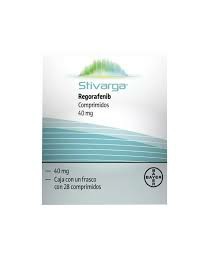
The clinical effect of regorafenib is mainly manifested in prolonging progression-free survival (PFS) and significantly improving disease control rate (DCR), especially in terms of disease stabilization. Although the objective response rate (ORR) of this drug may not be high in some cases, by continuously inhibiting tumor expansion, regorafenib helps patients achieve an effective delay in disease progression, which is of great clinical significance for patients with advanced GIST. Because the drug does not rely on a single pathway, it has certain advantages in effectiveness against multiple KIT mutation subtypes, especially for those tumor cell populations with heterogeneous mutations or multiple mutations.
In terms of medication strategy, regorafenib is usually given in a cyclical schedule, with each cycle lasting four weeks, with continuous medication in the first three weeks and discontinuation in the fourth week. The standard recommended dose is 160 mg once daily, taken after meals to enhance drug bioavailability. Since this drug may cause severe toxic side effects, such as hand-foot syndrome, hypertension, rash, diarrhea, fatigue, etc., clinicians need to closely monitor the patient's tolerance and adjust the dose in a timely manner based on individual responses to ensure a balance between efficacy and safety. Some patients will experience adverse reactions in the early stages of treatment. At this time, by reducing the dose, delaying administration, etc., the toxic and side effects can be effectively controlled to ensure the sustainability of long-term medication.
It is worth noting that regorafenib is effective in late stage patientsThe role of GIST is not to significantly reduce the tumor volume, but more commonly to achieve a stable tumor state and prevent further expansion or metastasis. Therefore, during imaging evaluation, we should not only pay attention to changes in tumor diameter, but also comprehensively analyze other indicators such as lesion density and metabolic activity. Modern medical imaging methods such as PET-CT can detect drug reactions earlier and guide whether to continue treatment or make program adjustments.
Reference materials:https://www.stivarga-us.com/
[ 免责声明 ] 本页面内容来自公开渠道(如FDA官网、Drugs官网、原研药厂官网等),仅供持有医疗专业资质的人员用于医学药学研究参考,不构成任何治疗建议或药品推荐。所涉药品可能未在中国大陆获批上市,不适用于中国境内销售和使用。如需治疗,请咨询正规医疗机构。本站不提供药品销售或代购服务。


