
.jpeg)
How long does it take to take a complete course of Ivonib?
Ivosidenib is an oral small molecule targeted drug mainly used to treat solid tumors such as acute myeloid leukemia (AML) or cholangiocarcinoma carrying IDH1 mutations. As a long-term targeted therapy, the length of treatment usually varies depending on the type of disease, individual patient response and the plan formulated by the doctor. The following will discuss the approximate duration of a complete course of treatment from four aspects: indications, treatment design, efficacy evaluation and special circumstances.
In the treatment of acute myeloid leukemia, ivonib is mainly used as a monotherapy for patients with relapsed or refractory AML. It can also be used in combination with azacitidine for elderly patients who have not yet been treated. In this type of treatment, the course of treatment usually does not have a strict time limit, but is based on the principle of "continuing to take it until the disease progresses or is intolerable." According to clinical studies, some patients can observe significant effects after 4-6 months of treatment, but in order to consolidate remission, treatment often needs to continue for a year or even longer. During treatment, doctors will regularly assess bone marrow status and mutation load to determine whether to continue medication.
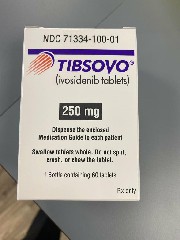
For patients with solid tumors such as cholangiocarcinoma, especially locally advanced or metastatic cholangiocarcinoma with IDH1 mutations, ivonib is often used as a second-line treatment. Under this indication, if the patient responds well to the drug and can tolerate the side effects, the treatment cycle can be extended from several months to more than a year. Some clinical trials have shown that the median treatment time for effective patients is approximately 6 to 9 months, but the specific course of treatment still needs to be determined based on dynamic assessment of imaging and biochemical indicators.
In actual clinical application, the treatment course of ivonib is more flexible. For patients who achieve complete response (CR) or partial response (PR), doctors will decide whether to maintain treatment based on the residual disease. For those who do not see obvious effects or experience serious adverse reactions, they may consider changing the regimen after 2 to 3 months. Therefore, a complete course of treatment may be a short-term 3 months of observational medication, or it may be extended to 12 months or even longer, which needs to be adjusted based on individual treatment response.
It should also be noted that as a targeted therapeutic drug, the efficacy of ivonib depends on the persistence of IDH1 mutations. Therefore, during long-term medication, some patients may have reduced efficacy due to clonal evolution or drug-resistant mutations. Once disease progression occurs, medication should be discontinued in a timely manner and treatment strategies should be changed. In general, a complete course of ivonib treatment usually ranges from several months to a year, and the specific course of treatment should be determined by a professional doctor based on a comprehensive assessment of the disease dynamics and individual differences.
Reference link:https://www.tibsovo.com/
[ 免责声明 ] 本页面内容来自公开渠道(如FDA官网、Drugs官网、原研药厂官网等),仅供持有医疗专业资质的人员用于医学药学研究参考,不构成任何治疗建议或药品推荐。所涉药品可能未在中国大陆获批上市,不适用于中国境内销售和使用。如需治疗,请咨询正规医疗机构。本站不提供药品销售或代购服务。


