
.jpeg)
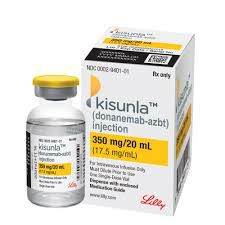
Donanemab (Donanemab) real treatment effect and research data analysis
Donelumab is a monoclonal antibody that targets amyloid beta and is used to treat patients with early Alzheimer's disease (AD), namely mild cognitive impairment (MCI) or mild dementia (early symptomatic AD). Its core mechanism is to clear amyloid plaques in the brain, thereby delaying cognitive and functional deterioration.
In the critical III phase TRAILBLAZER‑ALZ 2 In clinical studies, donelenumab reduced the decline in cognitive scores (iADRS) by approximately 22% in the overall population, and clinical trace scores (CDR‑SB< /span>) decreased slowly by 29%; in the low-moderate tau level subgroup, cognitive and functional deterioration was slowed by nearly 35%—36%. Among them, the delayed effect was more significant in the mild cognitive impairment group, with iADRS falling by 60% and CDR SB falling by 46%, supporting the better effect of early intervention.
From a daily life perspective, patients treated with donelenumab experienced a 18 month reduction in decline in ability to perform daily activities by 40%,< /span>CDR‑GlobalScore progression risk reduction 39%. In addition, approximately 47% of treated patients showed no significant cognitive decline within one year (compared to 29% of the control group), highlighting that some patients can remain stable.
In terms of imaging indicators, donenezumab showed a strong amyloid plaque clearance effect: low–moderateIn the tau subgroup, 37.6% were cleared at 24 weeks, and 76 weeks as high as 83.1%, far exceeding the near-zero value in the control group. In a phase I safety dose escalation study, a single dose could achieve approximately 50%–60% amyloid plaque reduction at 24 weeks, and this could last until 72 weeks.
In terms of adverse events, the main adverse reactions of donenezumab are amyloid-related imaging abnormalities (ARIA), including cerebral edema (ARIA‑E, about 17.9 %asymptomatic, 6.1%symptomatic) and microbleeds (ARIA‑H, about 31.4%). Although comparative tissue suggests the risk is manageable, close monitoring is required. Others include infusion-related reactions (8.7%) and allergic reactions.
Overall, donenezumab can significantly delay the cognitive and functional deterioration of early-stage AD patients, especially those with early intervention. It can effectively remove amyloid plaques, supporting its use as a potential disease-modifying treatment strategy. Although risks such as ARIA need to be managed, the efficacy and signal strength shown in the III trial have been unanimously supported by the U.S. FDA advisory committee. Donelumab is another important breakthrough in the treatment of AD after Aduhelm and Lecanemab .
Reference materials:https://www.drugs.com/donanemab.html
[ 免责声明 ] 本页面内容来自公开渠道(如FDA官网、Drugs官网、原研药厂官网等),仅供持有医疗专业资质的人员用于医学药学研究参考,不构成任何治疗建议或药品推荐。所涉药品可能未在中国大陆获批上市,不适用于中国境内销售和使用。如需治疗,请咨询正规医疗机构。本站不提供药品销售或代购服务。


