
.jpeg)
What is the clinical effect of Vorasidenib in the treatment of glioma?
Vorasidenib is an oral, targeted drug with good brain penetration that specifically inhibits mutant isocitrate dehydrogenase 1 (IDH1) and IDH2. The drug is primarily used to treat low-grade gliomas (LGG) that carry IDH mutations, especially in patients with residual tumor after surgery. Its clinical efficacy and safety have been verified in multiple studies, especially the INDIGO Phase III clinical trial.
Clinical efficacy: significantly delay disease progression
In the phase III clinical trial of INDIGO, 331 grade 2 glioma patients with IDH mutations that persisted after surgery were randomly assigned to receive either vorsidenib or placebo. The results showed that the median progression-free survival (PFS) in the voroxiranib group was 27.7 months, while that in the placebo group was 11.1 months. The hazard ratio (HR) was 0.39, and P value <0.001, indicating that voroxiranib significantly delayed disease progression. Additionally, the median time to next treatment (TTNI) has not been reached in the voroxiranib group compared with 17.8 months, HR
In terms of safety, the side effects of vorsidenib mainly include fatigue, headache, nausea, seizures, and reversible liver enzyme elevations. Among them, the incidence rate of grade 3 or above adverse events was 22.8%, mainly due to elevated liver enzymes (9.6%). Of note, the incidence of seizures in the voroxiranib group was 4.2%, which was significantly lower than the 51.2% rate in the placebo group. >(HR=0.36, P=0.0263), showing the potential of vorsidenib in reducing epileptic seizures.
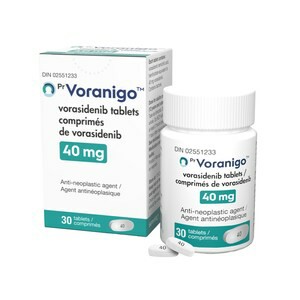
Mechanism and drug properties
Voxirinib inhibits mutant IDH1 and IDH2, reducing intracellular 2-Hydroxyglutarate (2-HG) accumulation, thereby restoring normal DNA methylation and gene expression, inhibiting the proliferation of tumor cells. The drug has good brain penetration and can effectively act on tumor cells in the central nervous system. In addition, the oral administration mode of vorsidenib improves patient compliance and is suitable for long-term treatment.
Clinical significance and future prospects
The launch of vorsidenib provides a new treatment option for patients with IDHmutated low-grade glioma, especially when residual tumor remains after surgery. Its effect of significantly delaying disease progression provides patients with more progression-free survival time, reduces dependence on traditional radiotherapy and chemotherapy, and reduces treatment-related side effects. In the future, vorsidenib may be used in combination with other targeted drugs or immunotherapies to further improve efficacy. However, more clinical studies are still needed to evaluate its long-term efficacy and safety.
In short, as a targeted drug for IDH mutated low-grade glioma, vorsidenib has demonstrated good clinical efficacy and safety, providing patients with a new treatment option. With the deepening of research, vorsidenib is expected to play a greater role in the treatment of glioma.
Reference materials:https://www.drugs.com/donanemab.html
[ 免责声明 ] 本页面内容来自公开渠道(如FDA官网、Drugs官网、原研药厂官网等),仅供持有医疗专业资质的人员用于医学药学研究参考,不构成任何治疗建议或药品推荐。所涉药品可能未在中国大陆获批上市,不适用于中国境内销售和使用。如需治疗,请咨询正规医疗机构。本站不提供药品销售或代购服务。


