
.jpeg)
How effective is Tarlatamab in the treatment of small cell lung cancer?
Tarlatamab (Tarlatamab), as a new type of bispecific antibody (Bispecific T-cell engager, BiTE), shows broad prospects in the treatment of small cell lung cancer (SCLC). Small cell lung cancer is a highly aggressive lung cancer, accounting for about 15% of all lung cancers. It develops rapidly and is prone to early metastasis. Although traditional treatments can control the disease to a certain extent, the recurrence rate and drug resistance are high, and the prognosis of patients is generally poor. In recent years, the rise of immunotherapy has brought new hope to the treatment of small cell lung cancer, and talatumumab is one of the representative innovative drugs.
Talatumumab has a unique and precise mechanism. It is a bispecific antibody drug that simultaneously targets CLDN18.2(claudin on the surface of tumor cells. 18.2, a tight junction protein, highly expressed in some small cell lung cancer cells) and CD3 molecules on T cells. Through this dual targeting, talatumumab can effectively guide T cells in patients to the vicinity of tumor cells, promote the contact between T cells and tumor cells, thereby activating T cells to kill tumor cells. This mechanism not only bypasses the tumor immune environment prerequisite required by traditional immune checkpoint inhibitors, but also more directly and efficiently mobilizes the body's immune system to fight tumors, significantly improving the ability of immune cells to recognize and attack tumors.
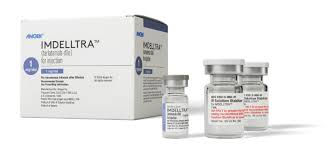
Clinical trial data show that talatumumab shows certain efficacy in the treatment of small cell lung cancer. For patients with advanced SCLC who have failed multiple lines of treatment and have disease progression, the objective response rate (ORR) of talatumumab has reached 10%-20%, and some patients have achieved sustained tumor control, and the response time is longer than that of traditional therapy. Especially in patients with tumors with high expression of CLDN18.2, the therapeutic effect is more obvious. After receiving talatumumab treatment, the patient's tumor burden was significantly reduced, his symptoms were relieved, and his quality of life was improved to some extent. In addition, the side effects of talatumumab are generally controllable, mainly including mild to moderate infusion-related reactions, fever, fatigue, and some immune-mediated adverse events, such as rash and abnormal liver function. Most of these side effects can be alleviated through supportive treatment and dose adjustment, and no serious life-threatening adverse events have been reported.
It is worth noting that although talatumumab monotherapy has shown certain efficacy, its future development directions are also very diverse. Current studies are exploring the use of talatumumab in combination with other treatment options, including with chemotherapy drugs, immune checkpoint inhibitors (such asPD-1/PD-L1antibodies), and radiation therapy. Multimodal treatment is expected to further improve the overall survival rate and progression-free survival of patients with small cell lung cancer and break through the bottleneck of single treatment. In addition, the gene expression characteristics of different patients, especially the expression level of CLDN18.2, also provide the possibility for precise medication and personalized treatment, and it is expected to achieve more precise and efficient treatment plans in the future.
To sum up, talatumumab, as an innovative bispecific antibody drug, is becoming an important breakthrough in the field of immunotherapy for small cell lung cancer due to its unique immune activation mechanism and precise targeting of small cell lung cancer tumor-specific antigen CLDN18.2. Although its clinical application is still in the early stages and efficacy data still need to be further accumulated and verified, it provides new treatment options and hope for patients with small cell lung cancer. In the future, as more clinical trial results are announced and treatment options are optimized, talatumumab is expected to play a greater role in improving the prognosis of patients with small cell lung cancer and become an important tool in the treatment of this malignant tumor.
Reference materials:https://www.drugs.com/donanemab.html
[ 免责声明 ] 本页面内容来自公开渠道(如FDA官网、Drugs官网、原研药厂官网等),仅供持有医疗专业资质的人员用于医学药学研究参考,不构成任何治疗建议或药品推荐。所涉药品可能未在中国大陆获批上市,不适用于中国境内销售和使用。如需治疗,请咨询正规医疗机构。本站不提供药品销售或代购服务。


