
.jpeg)
Can 0.01% atropine sulfate eye drops EIKANCE effectively control the progression of myopia in children?
0.01% atropine sulfate eye drops (EIKANCE) has certain efficacy in controlling the progression of myopia in children, and has gradually been recognized and promoted in clinical practice in recent years. EIKANCE is a patented preparation launched by Australia's Regis company. It is currently the world's first and only 0.01% low-concentration atropine drug approved to control the progression of myopia in children. This article will systematically explain the role of this drug in myopia control from its mechanism of action, clinical research data, safety and usage recommendations.
First of all, from a pharmacological point of view, atropine sulfate is a Mcholine receptor blocker. It blocks the M choline receptors of the ciliary muscles and iris sphincter of the eye, reducing the regulatory stress of the ciliary muscles for close work, thereby reducing the excessive growth of the eye axis. The increase in axial length is the core mechanism of the development of myopia, so inhibiting axial lengthening means slowing down the progression of myopia. Although the traditional 1% concentration atropine has a significant control effect, it has serious side effects, such as photophobia, blurred near vision, and pupil dilation. In contrast, atropine at a concentration of 0.01% significantly reduces the incidence of side effects and can still provide a relatively stable myopia control effect, making it a better choice for children and adolescents.
Secondly, judging from clinical research data, multiple international research projects have provided strong evidence for the effectiveness of EIKANCE. Especially studies on children in Asia and Australia have shown that continuous use of 0.01%atropine 1 to 2 years can reduce the rate of myopia progression by about 50%-60%, and the elongation of the eye axis is also significantly slowed down. Although compared with high-concentration atropine (such as 0.1% or 0.5% ), the control effect is slightly weaker, but due to mild side effects and high compliance, low-concentration atropine is more suitable for long-term use and is more easily accepted by parents and children.
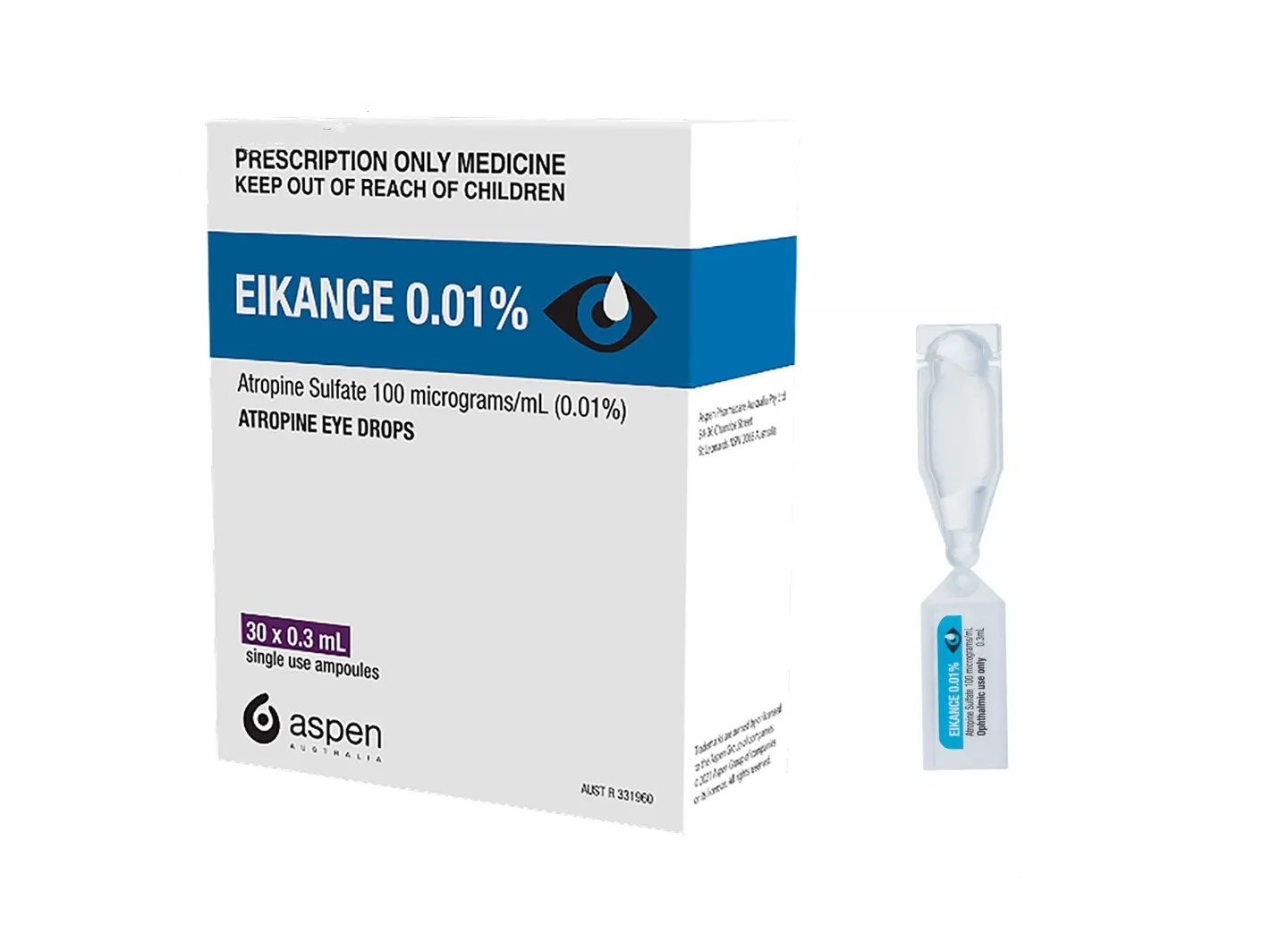
Third, regarding safety and usage precautions, EIKANCE has shown good tolerance during use. Common adverse reactions include mild pupil dilation, mild night vision loss, or light sensitivity, but most children adapt quickly and do not need to discontinue use. Prescribing medication on time under the guidance of a regular ophthalmologist, and parents taking their children to regularly review the eye axis and refractive index can ensure the efficacy while minimizing the occurrence of side effects. At the same time, the concurrent use of other mydriatic or anticholinergic drugs should be avoided to avoid drug interactions.
Finally, it needs to be emphasized that EIKANCE is not a magic medicine to "cure myopia", but an effective tool to "slow down the progression of myopia". Using atropine eye drops does not reverse myopia that has already occurred, but it can help control the annual increase in myopia. Coupled with good eye-use habits, such as reducing long-term use of eyes at close range, increasing time for outdoor activities, and maintaining correct reading and writing postures, it will help to further improve the treatment effect. Ophthalmologists generally recommend that a regular eye health examination system should be established from an early age. Once a tendency toward myopia is discovered, early intervention is required to obtain the best prognosis.
To sum up, 0.01%Atropine Sulfate Eye Drops (EIKANCE), as a myopia control drug with low side effects and long-term use, has been proven to have good myopia control effect in children and adolescents. Although it cannot completely prevent the progression of myopia, it can be used as an important part of clinical intervention to provide strong support for the visual health of children during their growth and development period. In the future, with the advancement of more relevant research and the follow-up of domestic regulatory policies, EIKANCE is expected to play a role in a wider range of clinical settings. Parents still need to follow the doctor's advice when choosing such drugs, and do not use drugs without authorization or blindly pursue preparations with higher concentrations.
Reference materials:https://www.medsafe.govt.nz/profs/datasheet/e/EikanceEyeDrops.pdf
[ 免责声明 ] 本页面内容来自公开渠道(如FDA官网、Drugs官网、原研药厂官网等),仅供持有医疗专业资质的人员用于医学药学研究参考,不构成任何治疗建议或药品推荐。所涉药品可能未在中国大陆获批上市,不适用于中国境内销售和使用。如需治疗,请咨询正规医疗机构。本站不提供药品销售或代购服务。


