
.jpeg)
Detailed efficacy and clinical effect analysis of Ribociclib
Ribociclib is an oral, selective cyclin-dependent kinase (CDK4/6) inhibitor that is widely used to treat hormone receptor-positive, HER2-negative advanced or metastatic breast cancer. As one of the representative drugs of the CDK4/6 inhibitor family, ribociclib has demonstrated good efficacy and survival benefits in multiple large-scale clinical trials, bringing longer progression-free survival and overall survival to many breast cancer patients. The following will provide a detailed analysis of its efficacy and clinical application value from four aspects: drug mechanism, indications, clinical research results and medication precautions.
1. Pharmacological mechanism of Riboxil
The cell cycle is a key process in regulating cell division and proliferation, and CDK4 and CDK6 are important protein kinases that regulate the transition from G1 phase to S phase. They are related to After binding to cyclin D, it can phosphorylate Rb protein (retinoblastoma protein), relieve Rb’s inhibition of E2F transcription factors, and promote the continued advancement of the cell cycle. In hormone receptor-positive breast cancers, this pathway is frequently activated, leading to unlimited cell proliferation.
Riboxiclib blocks the phosphorylation process of Rb protein by highly selectively inhibiting CDK4 and CDK6. The tumor cells stay in the G1 phase and cannot further replicate the DNA into the S phase, thereby achieving the purpose of inhibiting the growth of tumor cells. This mechanism not only effectively curbs the proliferation of cancer cells, but also enhances the effect of endocrine therapy, which is significantly helpful in prolonging the disease control period of patients.
2. Indications and clinical applications
Riboxiclib is primarily approved to treat:
Postmenopausal women or some young women with hormone receptor-positive (HR+), human epidermal growth factor receptor 2-negative (HER2-) advanced or metastatic breast cancer;
Use in combination with aromatase inhibitors (such as letrozole) or antiestrogens (such as fulvestrant);
As a first-line or second-line treatment, it is especially suitable for patients who have not received CDK4/6 inhibitor treatment.
Reboxiclib is often used in combination with letrozole as initial endocrine therapy, and can also be used in combination with fulvestrant for patients after endocrine therapy failure. Studies have shown that in patients with HR+/HER2- metastatic breast cancer, ribociclib combined with endocrine therapy can significantly prolong progression-free survival (PFS) and overall survival (OS) of some patients.
3. Key clinical research results
The efficacy of Riboxiclib has been verified in multiple clinical studies, the most representative of which is the MONALEESA series of studies.
1.MONALEESA-2Research
This study evaluated the efficacy of ribociclib combined with letrozole in treatment-naïveHR+/HER2- postmenopausal patients with metastatic breast cancer. The results showed that the combination significantly prolonged progression-free survival, with the median PFS in the reboxil group being 25.3 months compared with 16 months in the letrozole group. In addition, the objective response rate (ORR) was also higher in the reboxil group.
2.MONALEESA-3Research
This study evaluated the combination of reboxiclib and fulvestrant in patients with treatment-naïve or previously received endocrine therapyHR+/HER2- advanced breast cancer. Data show that the median progression-free survival time of the combination group is 20.5 months, which is significantly better than the 12.8 months of the fulvestrant single-agent group, indicating that Riboxiclib still has important clinical value for patients who have failed previous treatments.
3.MONALEESA-7Research
This is the first CDK4/6 study specifically for premenopausal young women. The results also show that reboxil combined with endocrine therapy can significantly improve the survival prognosis of these patients, breaking the dilemma of limited treatment options for young breast cancer patients.
In addition, multiple studies have also confirmed that ribociclib can delay the start of chemotherapy, improve quality of life, and has potential protective effects on the central nervous system. It is an important supplement to the current endocrine therapy for breast cancer.
4. Medication precautions and side effects
Despite the outstanding efficacy of Riboxiclib, you still need to pay attention to the following points during use:
1.Common side effects
The most common side effect is neutropenia, accounting for more than 70% of patients. Although most of them are reversible and non-febrile, blood images still need to be closely monitored. In severe cases, the drug may need to be temporarily discontinued or the dose adjusted. Other side effects include nausea, fatigue, diarrhea, abnormal liver function, and prolonged QT interval.
2.Electrocardiogram monitoring
Due to the risk of QT prolongation of the QT interval, an electrocardiogram should be checked before taking the medicine to evaluate whether it is suitable for use; regular rechecks should also be carried out while taking the medicine, especially when there is a risk of arrhythmia or combined medication.
3.Liver function and drug interactions
Riboxiclib is mainly metabolized in the liver. Concomitant use of strong CYP3A4 inhibitors or inducers may affect the efficacy of the drug. It should be avoided to be taken with certain antifungal drugs, anti-epileptic drugs or grapefruit juice.
4.Usage period and dosage
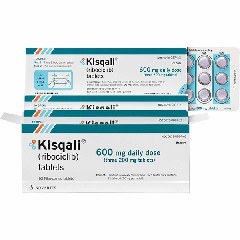
Standard usage is 600mgonce a day, taking the medicine 3weeks off 1weeks is a cycle, continuously. Depending on individual tolerance and the degree of adverse reactions, it can be gradually reduced to 400mg or 200mg.
To sum up, as an important member of CDK4/6 inhibitors, ribociclib has become a first-line recommended drug in the treatment of HR+/HER2- advanced breast cancer due to its excellent performance in prolonging progression-free survival, improving quality of life and delaying the need for chemotherapy. Through scientific and reasonable combination of endocrine therapy, close monitoring of side effects and individualized adjustment of medication regimens, Riboxiclib can bring long-term control and improvement in quality of life to more breast cancer patients. In the future, with the accumulation of more real-world data and the development of potential new indications, the application prospects of Riboxiclib in the field of tumor treatment will continue to expand.
Reference materials:https://us.kisqali.com/
[ 免责声明 ] 本页面内容来自公开渠道(如FDA官网、Drugs官网、原研药厂官网等),仅供持有医疗专业资质的人员用于医学药学研究参考,不构成任何治疗建议或药品推荐。所涉药品可能未在中国大陆获批上市,不适用于中国境内销售和使用。如需治疗,请咨询正规医疗机构。本站不提供药品销售或代购服务。


