
.jpeg)
QuANTUM-Wild trial explores outcomes associated with quizatinib in FLT3-negative AML
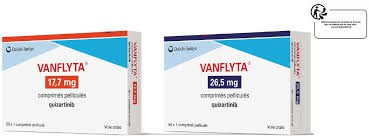
Because the FLT3 inhibitorquizartinib (Quizartinib) has shown efficacy in patients with both FLT3-ITD-positive acute myeloid leukemia (AML) and FLT3-ITD-negative AML, ongoing studies are designed to answer questions about the drug's mechanism of action and the predictive value of FLT3 gene expression.
In 2023, the U.S. Food and Drug Administration (FDA) approved quizartinib for use in combination with standard induction and consolidation chemotherapy and as maintenance monotherapy after consolidation chemotherapy for the treatment of newly diagnosed adult patients with FLT3-ITD-positive AML. In the pivotal Phase 3 QuANTUM First trial (NCT02668653), patients who received quizartinib plus chemotherapy (n=268) had a statistically significant improvement in overall survival (OS) compared with those who received placebo plus chemotherapy (n=271; HR, 0.78; 95% CI, 0.62-0.98; two-sided P=0.0324).
The phase II QUIWI trial (NCT04107727) demonstrated the efficacy of quizartinib in patients with FLT3-ITD-negative AML. At a median follow-up of 39.4 months, median event-free survival (EFS) for quizatinib plus induction and consolidation chemotherapy was 18.8 months (n=180), compared with 9.9 months for placebo plus chemotherapy. (n=93; HR, 0.732; 95%CI, 0.533-1.005; P=0.0455). Compared with 29.3 months in the control group, the median OS in the quizartinib group and placebo group was not reached (HR, 0.625; 95% CI, 0.436-0.897; P=0.0009).
Building on the positive results from QUIWI, the ongoing confirmatory phase 3 QuANTUM Wild trial (NCT06578247) is evaluating the efficacy of quizartinib plus chemotherapy versus placebo plus chemotherapy in patients with newly diagnosed FLT3-ITD-negative AML. OS will be the primary endpoint. Key secondary endpoints will include EFS, duration of response, relapse-free survival, complete response (CR) rate, CR rate with minimal residual disease and safety.
FLT3 mutation is one of the most common mutations in acute myeloid leukemia (AML), and approximately 30% of patients have FLT3 mutations. There are two different types of FLT3 mutations: FLT3-ITD mutations and FLT3-TKD mutations. They are very different (from each other). Patients with FLT3-ITD mutations tend to have more aggressive disease than those with FLT3-TKD mutations, and they respond differently to different therapies.
Therapeutic interventions for patients with acute myeloid leukemia have evolved and are now molecular-based and targeted. We have established different drugs, some targeting FLT3 and others targeting other genetic mutations, such as IDH1/2. Some of these drugs targeting FLT3 target both ITD and TKD mutations, while others target only ITD mutations.
Quizartinib is one of the latest drugs approved by the U.S. Food and Drug Administration [for patients with AML] and was approved based on QuANTUM First data. [The drug] specifically targets FLT3-ITD-positive disease, whereas Gilteritinib, a drug approved based on the Phase 3 ADMIRAL study [NCT02421939] in relapsed/refractory AML, is available for FLT3-ITD- and -TKD-positive disease. Midostaurin is the first drug approved for patients with FLT3-positive AML and is also indicated for FLT3-ITD and TKD-positive disease.
Historically it was thought that we could design] targeted therapies to specifically target mutations, and then we could design trials to focus on mutation subgroups. The story with the FLT3 inhibitor Quizartinib is that most clinical trials must -- at least initially as proof of concept -- include patients with the mutation as well as patients with wild-type disease.
Similar to most targetable agents, we found that quizartinib worked well in patients with FLT3 mutations, so we expanded this cohort into a large randomized phase 3 clinical trial of 7+3 chemotherapy plus quizartinib vs standard of care [SOC] induction 7+3 chemotherapy [alone]. We found that patients with FLT3-ITD mutant AML had better overall outcomes if they were treated with quizartinib plus SOC [compared to SOC alone]. Interestingly, we realized that FLT3-negative or wild-type patients also seemed to have better outcomes with this drug initially than with SOC alone.
StartedThe QUIWI study, a randomized phase 2 clinical trial. It's similar to QuANTUM First, but we're enrolling patients who are FLT3-ITD negative [disease]. We found that, similar to the subpopulation of patients with FLT3-ITD mutations, the addition of quizartinib to SOC chemotherapy improved OS in FLT3-negative patients. [This extension of the study] provides a better understanding that not all patients lacking [FLT3] mutations are created equal. This is where gene expression - specifically that of FLT3 - becomes relevant. We found through correlation analysis that [some] patients with FLT3-negative disease ended up with [FLT3] expression levels similar to what we saw in patients with FLT3-positive disease. Patients do not necessarily have to have an FLT3 mutation to respond to FLT3-targeted therapy.
The QUIWI study was a larger proof-of-concept trial that has now led to the global randomized [QuANTUM Wild] clinical trial. Can we [replicate the QUIWI trial results] in a large international study [which is also comparing] SOC plus quizartinib versus SOC alone.
Mostpatients with FLT3-positive disease should probably receive treatment with a FLT3 inhibitor. That [decision] was easy. Then, tease out which patients in the non-mutated group would benefit most from a FLT3 inhibitor, rather than trying to develop potential non-FLT3-targeted treatment options [or combinations] for patients [with] multiple mutations. [In the future, we may] better understand gene expression and which FLT3-negative patients are most likely to respond to FLT3 inhibitors. We may then ultimately prefer to treat these patients initially with FLT3-targeted therapy.
Reference materials:https://www.onclive.com/view/quantum-wild-trial-to-explore-correlative-outcomes-with-quizartinib-in-flt3-negative-aml
[ 免责声明 ] 本页面内容来自公开渠道(如FDA官网、Drugs官网、原研药厂官网等),仅供持有医疗专业资质的人员用于医学药学研究参考,不构成任何治疗建议或药品推荐。所涉药品可能未在中国大陆获批上市,不适用于中国境内销售和使用。如需治疗,请咨询正规医疗机构。本站不提供药品销售或代购服务。


