
.jpeg)
What is the therapeutic effect of cabozantinib and what are the reports?
Cabozantinib, as a multi-target tyrosine kinase inhibitor, has achieved significant clinical efficacy in the treatment of a variety of solid tumors in recent years, and has been widely used in a variety of malignant tumors such as progressive medullary thyroid cancer (MTC), advanced renal cell carcinoma (RCC), and hepatocellular carcinoma (HCC). Its therapeutic effect has been fully verified through multiple large-scale clinical trials and real-world studies, showing a positive effect in extending patients' progression-free survival (PFS) and overall survival (OS).
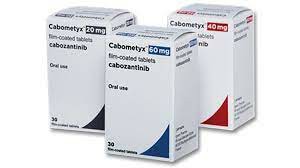
Cabozantinib can effectively inhibit the growth and metastasis of tumor cells in patients with medullary thyroid cancer, which is mainly due to its multi-target intervention in related signaling pathways. An international multi-center phase III clinical study showed that MTC patients treated with cabozantinib had significantly longer progression-free survival, and the objective response rate was significantly higher than that of the control group. This makes cabozantinib one of the current standard targeted therapies for this disease.
In the treatment of advanced renal cell carcinoma, cabozantinib also shows good efficacy, especially in patients who have failed previous treatment withVEGFR inhibitors. Cabozantinib can delay disease progression by inhibiting multiple tumor-promoting signaling pathways and effectively improve the quality of life of patients. In addition, the application of cabozantinib in hepatocellular carcinoma has also received increasing attention. As a first- or second-line treatment drug, it can inhibit tumor angiogenesis and cell proliferation through multiple mechanisms. Relevant clinical data show that patients’ tumor burden is reduced and their survival benefit is obvious.
It is worth noting that despite the outstanding therapeutic effect of cabozantinib, its treatment is often accompanied by certain side effects, such as gastrointestinal reactions (diarrhea, nausea), hypertension, hand-foot syndrome, and abnormal liver function. Close monitoring and reasonable dosage adjustment are required to balance efficacy and safety.
Reference:https://en.wikipedia.org/wiki/Cabozantinib
[ 免责声明 ] 本页面内容来自公开渠道(如FDA官网、Drugs官网、原研药厂官网等),仅供持有医疗专业资质的人员用于医学药学研究参考,不构成任何治疗建议或药品推荐。所涉药品可能未在中国大陆获批上市,不适用于中国境内销售和使用。如需治疗,请咨询正规医疗机构。本站不提供药品销售或代购服务。


