
.jpeg)
How effective is pralsetinib in the treatment of RET fusion lung cancer?
Pralsetinib is a targeted therapy drug targeting RET gene fusion mutations. It is mainly used to treat RET fusion-positive non-small cell lung cancer (NSCLC) and certain types of thyroid cancer. RETfusion is a rare driver gene mutation, with an incidence rate of about 1% to 2% in patients with non-small cell lung cancer. However, once such mutations occur, conventional chemotherapy or immunotherapy has limited effect, so the development of precise targeted drugs is particularly critical. The advent of platinib has brought new treatment options to these patients.
From a mechanism of action point of view, platinib is a highly selective RET kinase inhibitor that can specifically block the signal transduction triggered by the RET fusion gene, thereby inhibiting the growth and spread of tumor cells. Compared with some multi-target inhibitors, platinib has a stronger affinity for RET targets and has less impact on other non-RET kinases, so it has relatively low side effects and higher safety. This high selectivity enables platinib to exhibit good efficacy and tolerability in clinical treatment.
In multiple clinical studies, platinib has shown a high objective response rate (ORR) in patients with RET fusion-positive non-small cell lung cancer. For example, in the ARROW clinical trial, for RETfusion-positiveNSCLCpatients, the overall response rate of platinib is close to70%, and some patients can achieve significant tumor shrinkage or maintain disease stability for a long time. This result is relatively rare in previous lung cancer treatment options, especially in people with positive driver gene mutations. Platinib provides a precision treatment strategy similar to ALK inhibitors and ROS1 inhibitors.
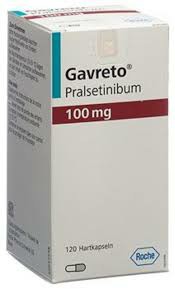
It is worth noting that platinib also performs relatively positively in the treatment of patients with brain metastases. Brain metastasis is a common complication in patients with advanced non-small cell lung cancer. Many targeted drugs are difficult to effectively act on the central nervous system due to the existence of the blood-brain barrier. Platinib, by virtue of its molecular structure, has a certain ability to penetrate the blood-brain barrier and has achieved good therapeutic responses in some patients with brain metastases, providing new hope for patients who had "no drugs available" in the past.
However, despite its remarkable efficacy, platinib still has some treatment challenges. For example, some patients respond well in the early stages of treatment, but as treatment progresses, secondary resistance or disease progression may occur, which is related to tumor heterogeneity or new secondary mutations. In addition, some patients may also experience mild to moderate adverse reactions during use, such as high blood pressure, elevated transaminases, constipation, fatigue, etc., which need to be managed and monitored under the guidance of a doctor.
From the perspective of actual use, platinib has been approved for marketing in many countries, and has been officially approved in my country in recent years for the treatment of RETfusion-positive NSCLC. However, the drug is currently not included in the national medical insurance catalog, so patients need to bear the cost of treatment at their own expense. Taking the original drug on the domestic market as an example, the price of 80mg*60 tablets is relatively high, which may range from more than 10,000 to tens of thousands of yuan. For patients with limited financial conditions, this is undoubtedly a greater burden.
In order to alleviate the financial pressure on patients, some overseas pharmaceutical companies have also launched generic versions of platinib. For example, the generic version produced by Laos Lucius Pharmaceutical Company is more affordable, and some specifications are only a fraction of the original drug. Although generic drugs are basically the same in terms of active ingredients, patients should still ensure that they are from formal sources when choosing and use them under the guidance of professional doctors to ensure therapeutic effects and safety.
To sum up, platinib, as a highly selective targeted drug targeting RET fusion mutations, has shown excellent efficacy and good safety in the treatment of non-small cell lung cancer. It is especially suitable for patients with RET fusion-positive patients who are ineffective with traditional therapies. With the development of precision medicine, Platinib has broad clinical application prospects and is expected to become an important means for the long-term management of patients with RET mutations. In the future, if the solution to the drug resistance mechanism can be further optimized and the cost of drugs can be reduced, its accessibility and practical value in the treatment of lung cancer will be greatly improved.
Reference materials:https://gavreto.com/
[ 免责声明 ] 本页面内容来自公开渠道(如FDA官网、Drugs官网、原研药厂官网等),仅供持有医疗专业资质的人员用于医学药学研究参考,不构成任何治疗建议或药品推荐。所涉药品可能未在中国大陆获批上市,不适用于中国境内销售和使用。如需治疗,请咨询正规医疗机构。本站不提供药品销售或代购服务。


