
.jpeg)
What are the affordable alternatives to selumetinib that have similar effects?
Selumetinib as an oral selective MEK1/2 inhibitor, is an innovative targeted drug with significant clinical value in the treatment of neurofibromatosis type 1 (NF1)-related plexiform neurofibromas (PN). The drug effectively blocks abnormal cell proliferation and tumor progression by inhibiting the activity of MEK enzyme in the Ras-Raf-MEK-ERK pathway. However, due to the high price of the original drug selumetinib, many patients cannot afford it in the long term. Therefore, "whether there are alternative drugs with more affordable prices and similar efficacy" has become the focus of clinical and patient groups. Combining overseas authoritative information and existing drug development trends, there are currently several drugs with similar mechanisms or potential alternative values u200bu200bthat can be considered.
The first thing you can pay attention to is Trametinib (Trametinib), which is a MEK inhibitor like selumetinib and its target is also focused on MEK1/2 in the MAPK signaling pathway. Trametinib was initially approved for the treatment of BRAF-mutated melanoma, and its mechanism of blocking tumor cell proliferation signals is very similar to selumetinib. Although the indications in the Chinese market have not yet been extended to NF1-related PN, "off-label" use has been recorded in some countries for a variety of solid tumors. The international generic version of trametinib has been launched in large quantities in countries such as India. The price is much lower than that of the original drug. Under the guidance of rational drug use, it has strong substitution potential for people who do not have the accessibility of selumetinib.
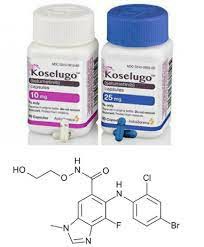
Next is Cobimetinib, which is also a MEK inhibitor and is also widely used in combination therapy for BRAF V600 mutation-related tumors. Although their anti-tumor mechanisms are slightly different, their overall effects on inhibiting the MAPK pathway are relatively similar. At present, many generic drug manufacturers have deployed their generic market versions and are gradually opening them up for use in some countries in Europe, America and Asia. It is worth mentioning that Cobimetinib has also shown a certain tumor shrinkage effect in NF1 studies in animal models. Although it has not yet been officially approved as an NF1 treatment drug, it theoretically has the potential to replace it.
Furthermore, although Regorafenib (Regorafenib) is not a MEK inhibitor, but a multi-target tyrosine kinase inhibitor (TKI), it has a wide anti-tumor spectrum, including interference with VEGFR, PDGFR, RAF and other pathways. In studies of some RAS mutant solid tumors and soft tissue tumors, regorafenib has shown good results. Its indirect regulation of the RAS-MAPK pathway also makes it of certain research significance in some NF1-related cases. At present, the price of domestic generic drugs of regorafenib has dropped significantly, and it has been included in medical insurance, which has certain practicality as an "indirect alternative".
In addition, among price-sensitive patient groups, generic versions of selumetinib through overseas channels may also be considered. For example, there are pharmaceutical companies (such as Lucius Pharmaceuticals) in countries such as Laos and India that produce generic drugs of selumetinib. The price starts from a thousand yuan, which is much lower than the tens of thousands yuan of the original drug. Although there are legal and drug regulatory issues related to cross-border drug purchase, under the guidance of legal compliance channels for patients, this type of generic drugs is still an economically feasible option for Chinese patients to obtain selumetinib treatment.
Reference materials:https://www.koselugo.com
[ 免责声明 ] 本页面内容来自公开渠道(如FDA官网、Drugs官网、原研药厂官网等),仅供持有医疗专业资质的人员用于医学药学研究参考,不构成任何治疗建议或药品推荐。所涉药品可能未在中国大陆获批上市,不适用于中国境内销售和使用。如需治疗,请咨询正规医疗机构。本站不提供药品销售或代购服务。


