
.jpeg)
How long can Enasidenib be taken safely?
Enasidenib is a selective inhibitor of IDH2, mainly used to treat patients with relapsed or refractory acute myeloid leukemia (AML) who carry IDH2 mutations. As a targeted drug, it blocks the abnormal metabolic function of IDH2 mutant enzyme and restores the normal differentiation process of leukemia cells in the bone marrow, thereby controlling the disease. In practical applications, ensidipine is usually used orally with a long course of treatment, which is particularly suitable for chronic management treatment.
Regarding the duration of use of ensidipine, current clinical studies and real-world data indicate that the drug can be continued long-term as long as patients tolerate it and their condition is stable. In some clinical trials, patients were treated with ensidipine for more than a year or longer, and no significant increase in severe toxicity or organ damage was seen. Therefore, under the guidance of a doctor, as long as the efficacy is sustained and there are no obvious adverse reactions, ensidipine can be used as a long-term maintenance treatment option.
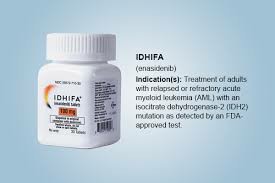
However, long-term use of ensidipine may also cause certain side effects, especially differentiation syndrome (differentiation syndrome), which is a serious complication that may occur in the early stages of treatment and requires timely identification and intervention. In addition, some patients may experience abnormal liver function, hyperbilirubinemia, or gastrointestinal reactions during medication. Therefore, regular blood routine monitoring, liver and kidney function, and electrolytes need to be monitored to evaluate medication safety.
In general, ensidipine does not have a strict "upper dose limit". As long as the patient has good efficacy and can tolerate it, it can be used for a long time. The key lies in individualized management and regular follow-up. Doctors will adjust the dose or decide whether to continue treatment based on changes in the patient's condition and body response. Therefore, it is recommended that patients maintain regular follow-up visits during use and closely cooperate with doctors’ evaluation to achieve a balance between disease control and quality of life.
Reference materials:https://www.idhifa.com/
[ 免责声明 ] 本页面内容来自公开渠道(如FDA官网、Drugs官网、原研药厂官网等),仅供持有医疗专业资质的人员用于医学药学研究参考,不构成任何治疗建议或药品推荐。所涉药品可能未在中国大陆获批上市,不适用于中国境内销售和使用。如需治疗,请咨询正规医疗机构。本站不提供药品销售或代购服务。


