
.jpeg)
The main functions and functions of aprocitentan capsules
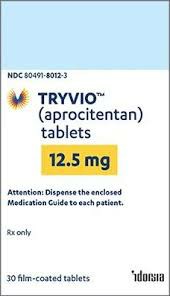
Aprocitentan (Aprocitentan) capsule is a new type of dual endothelin receptor antagonist, mainly used to treat refractory hypertension. It helps control blood pressure levels by blocking the binding of endothelin-1 (ET-1) to its receptors, providing a new treatment option for patients whose traditional antihypertensive treatments are ineffective. The following will introduce in detail the main functions and functions of Aprecitentan capsules in terms of drug action mechanism, clinical application, applicable population and potential advantages.
1. Mechanism of action: dual endothelin receptor antagonism, regulating vasoconstriction and blood pressure
Aprecitentan is an oral small molecule drug that has the ability to antagonize both endothelinA (ETA) and endothelinB (ETB) receptors. Endothelin-1 is a potent vasoconstrictor peptide secreted by vascular endothelial cells. It is found to be overexpressed in a variety of cardiovascular diseases, especially playing a key role in patients with refractory hypertension. ETA receptors are mainly distributed on vascular smooth muscles and mediate vasoconstriction; while ETB receptors are distributed on endothelial cells and some smooth muscles, which can not only cause vasodilation but also participate in the clearance of endothelin. Aprecitentan simultaneously inhibits ETA and ETB receptors, weakens the contractile effect of ET-1, and avoids the possible negative effects of ETB overactivation, thereby more effectively lowering blood pressure.
2. Clinical application: treatment of patients with refractory hypertension
The main indication of aprecitentan is the treatment of patients with refractory hypertension that are poorly controlled by traditional treatments. The so-called refractory hypertension usually refers to blood pressure still higher than the control target (usually above 140/90 mmHg) after using three or more different types of antihypertensive drugs (including a diuretic). Such patients are often accompanied by high endothelin levels, and aprecitentan makes up for the shortcomings of traditional antihypertensive treatments by blocking the endothelin pathway. In the pivotal PRECISION clinical trial, aprecitentan significantly reduced systolic blood pressure in patients with refractory hypertension. The effect was better than placebo, and the effect was long-lasting and well-tolerated.
3. Applicable groups: special groups in the treatment of hypertension
The treatment population of Aprecitentan is mainly concentrated in patients with refractory hypertension who are insensitive to conventional treatments, and is especially suitable for patients with cardiometabolic diseases (such as diabetes, obesity, chronic kidney disease, etc.). These patients often have endothelial dysfunction and generally elevated endothelin levels, resulting in limited effectiveness of traditional antihypertensive drugs such as ACEI, ARB, and calcium channel blockers. The addition of aprecitentan provides a new treatment path for these patients. In addition, the drug has the characteristics of being taken orally once a day and having sustained and stable effects, which helps to improve patient compliance and treatment effects.
4. Potential advantages and future prospects
The biggest difference between Aprecitentan and other antihypertensive drugs is its unique target—the endothelin pathway, which makes it have obvious complementary and synergistic antihypertensive effects. In clinical trials, no serious drug interactions were seen when this drug was used in combination with conventional antihypertensive drugs, indicating that it has good prospects for combined use. At the same time, because the endothelin system also plays a role in various diseases such as heart failure, chronic kidney disease, and pulmonary hypertension, aprecitentan's potential expanded indications in these diseases have also attracted attention in the future.
In addition, the drug performs well in terms of safety. Common adverse reactions include mild edema, headache, fatigue, etc., most of which are reversible reactions. The incidence and severity of adverse reactions are lower than some traditional endothelin receptor antagonists (such as bosentan), which also provides guarantee for its clinical promotion and application.
Aprecitentan capsule is a dual receptor antagonist targeting the endothelin system and is mainly used for the treatment of refractory hypertension. It effectively inhibits endothelin-mediated vasoconstriction by simultaneously blocking ETA and ETB receptors, thereby lowering blood pressure. It is especially suitable for patients in whom traditional treatments are ineffective. Clinical studies have shown that it has significant antihypertensive effect, sustained effect, and good safety, bringing new treatment options to patients with refractory hypertension. As relevant research continues to deepen, aprecitentan is expected to play an important role in more cardiovascular-related diseases and has broad prospects.
Reference materials:https://go.drugbank.com/drugs/DB15059
[ 免责声明 ] 本页面内容来自公开渠道(如FDA官网、Drugs官网、原研药厂官网等),仅供持有医疗专业资质的人员用于医学药学研究参考,不构成任何治疗建议或药品推荐。所涉药品可能未在中国大陆获批上市,不适用于中国境内销售和使用。如需治疗,请咨询正规医疗机构。本站不提供药品销售或代购服务。


