
.jpeg)
Basic information and pharmacological effects of cabozantinib
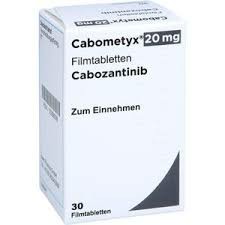
Cabozantinib is an oral small molecule multi-target tyrosine kinase inhibitor mainly used to treat a variety of advanced solid tumors, including medullary thyroid cancer (MTC), renal cell carcinoma (RCC), hepatocellular carcinoma (HCC) and differentiated thyroid cancer (DTC). The drug was developed by the US biotech company Exelixis and marketed under the trade names Cometriq (capsules) and Cabometyx (tablets).
1. Basic drug information
The two dosage forms of cabozantinib have different indications and uses:
Cometriq (capsules): Mainly used to treat progressive and metastatic medullary thyroid cancer.
Cabometyx (tablet): Indicated for advanced renal cell carcinoma, hepatocellular carcinoma, and locally advanced or metastatic differentiated thyroid cancer that has progressed after VEGFR-targeted therapy.
It should be noted that these two dosage forms are not interchangeable and must be used strictly in accordance with the doctor's prescription.
2. Pharmacological mechanism of action
Cabotinib exerts anti-tumor effects by inhibiting multiple tyrosine kinase receptors (RTKs), mainly including:
MET (hepatocyte growth factor receptor): Its expression is up-regulated in a variety of tumors and is closely related to the proliferation, invasion and metastasis of tumor cells.
VEGFR2 (vascular endothelial growth factor receptor 2): participates in tumor angiogenesis and is an important target for anti-angiogenic therapy.
RET (rearranged transfectase): commonly mutated in medullary thyroid cancer and drives tumorigenesis.
AXL, KIT, FLT3, etc.: These receptors play a role in the survival, migration and drug resistance of tumor cells.
By inhibiting multiple targets mentioned above simultaneously, cabozantinib can not only inhibit the proliferation and metastasis of tumor cells, but also block the formation of tumor blood vessels, thereby effectively controlling the growth and spread of tumors.
3. Indications, usage and dosage
The indications and dosage of cabozantinib vary depending on the dosage form and disease treated:
Medullary thyroid cancer (MTC): Use Cometriq capsules. The recommended dose is 140 mg, taken once daily on an empty stomach.
Advanced renal cell carcinoma (RCC):
Monotherapy: UseCabometyx tablets, the recommended dose is 60 mg, taken once daily on an empty stomach.
Combined with nivolumab (Nivolumab): Cabozantinib 40 mg, once daily, taken on an empty stomach. Nivolumab 240 mg every two weeks or 480 mg every four weeks as an intravenous infusion.
Hepatocellular carcinoma (HCC): Take Cabometyx tablets, the recommended dose is 60 mg once daily on an empty stomach.
Differentiated thyroid cancer (DTC): For adults and pediatric patients 12 years and older with a body surface area greater than or equal to 1.2 m², the recommended dose is 60 mg once daily on an empty stomach.
During treatment, if unacceptable toxic reactions occur, the dose needs to be adjusted or medication suspended according to the specific situation.
4. Pharmacokinetic characteristics
Cabozantinib has the following pharmacokinetic characteristics:
Absorption: It is well absorbed after oral administration, with peak concentration (Cmax) reached in 2 to 5 hours.
Distribution: Widely distributed in the body, with a plasma protein binding rate as high as99.7%.
Metabolism: Mainly metabolized in the liver through CYP3A4 enzyme to generate N-oxide and other metabolites.
Elimination: Mainly excreted through feces (approximately54%) and urine (approximately 27%).
It should be noted that food will significantly affect the absorption of cabozantinib, so it is recommended to take it on an empty stomach, that is, at least1 hour before a meal or at least 2 hours after a meal.
5. Precautions and drug interactions
The following should be noted when using cabozantinib:
Hepatic Impairment: In patients with moderate or severe hepatic impairment, dose adjustment or avoidance may be required.
Renal Impairment: No dose adjustment is required in patients with mild to moderate renal impairment, but data are lacking on use in patients with severe renal impairment.
Drug interactions: Cabozantinib is a substrate of the CYP3A4 enzyme. When combined with strong CYP3A4 inhibitors (such as ketoconazole) or inducers (such as rifampicin), its plasma concentration may be affected, so use caution or adjust the dose.
Surgery-related: Patients planning to undergo surgical procedures should discontinue cabozantinib at least28 days before surgery to reduce the risk of poor wound healing.
Reference:https://en.wikipedia.org/wiki/Cabozantinib
[ 免责声明 ] 本页面内容来自公开渠道(如FDA官网、Drugs官网、原研药厂官网等),仅供持有医疗专业资质的人员用于医学药学研究参考,不构成任何治疗建议或药品推荐。所涉药品可能未在中国大陆获批上市,不适用于中国境内销售和使用。如需治疗,请咨询正规医疗机构。本站不提供药品销售或代购服务。


