
.jpeg)
Analysis of the efficacy and therapeutic effect of giritinib targeted drug
Gilitinib is a new generation oral FLT3 inhibitor, mainly used to treat patients with acute myeloid leukemia (AML) who carry FLT3 gene mutations. Since its approval in the European and American markets, it has become an important targeted therapy option for the treatment of relapsed or refractory AML. With the development of precision medicine, giritinib has gradually received widespread attention and clinical application worldwide. This article will conduct an in-depth analysis of its mechanism of action, clinical efficacy, indications and future development directions.
First, the targeting mechanism of giritinib is highly selective. FLT3 (FMS-like tyrosine kinase3) is an important receptor expressed on the surface of hematopoietic stem cells, and its mutations (especially ITD Insertion mutations and TKD point mutations) exist in about 30% of AML patients. Such mutations are usually associated with rapid disease progression and poor prognosis. Giritinib can simultaneously inhibit FLT3-ITD and FLT3-TKD mutations, thereby effectively blocking the activation of related signaling pathways and inhibiting the growth and division of leukemia cells. This "dual targeting" mechanism is one of the important advantages of gilitinib that distinguishes it from the previous generation of FLT3 inhibitors.
In clinical studies, giritinib has demonstrated significant therapeutic effects. According to data from the pivotal ADMIRAL Phase III clinical trial, geritinib showed significantly better overall response rates (ORR) than traditional chemotherapy in patients with relapsed or refractory FLT3 mutated AML. The study showed that the median overall survival (OS) of patients using giritinib was 9.3 months, compared with 5.6 months in the group receiving standard chemotherapy, a risk reduction of 36%. In addition, giritinib can also create opportunities for hematopoietic stem cell transplantation for some patients, further improving long-term survival rates. Because of this, the FDAhas approved giritinib as the standard treatment for relapsed/refractoryFLT3mutatedAML.
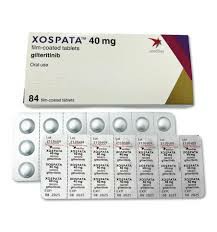
Giritinib has wide clinical applicability, especially for patients with AML who have failed previous treatment or whose disease has relapsed. Compared with traditional chemotherapy, its side effects are more controllable. Common adverse reactions include abnormal liver function, fatigue, diarrhea, stomatitis, prolongation of QT interval, etc. The overall tolerance is better. However, it is still necessary to regularly monitor electrocardiogram and liver and kidney function during use to prevent serious complications caused by the drug. It is worth noting that giritinib is a targeted drug, and its efficacy depends on the patient's FLT3 mutation status, so gene mutation testing must be performed before treatment.
In addition to being used for relapsed /refractory AML, the research of geritinib is also expanding to the fields of initial treatment AML, first-line combination therapy and maintenance therapy. For example, geritinib is being studied in combination with chemotherapy or other targeted drugs (such as Venetoclax), with the goal of improving complete response rates and prolonging progression-free survival (PFS). In addition, geritinib has also shown certain potential activity in some AML patients without FLT3 mutations but with activation of related pathways, suggesting that it is expected to expand its indications in the future.
In the global market, giritinib has been approved for marketing in many countries and regions, and has been included in many AML treatment guideline recommendations. In China, giritinib has also been approved for marketing and has become an important treatment option for domestic patients with FLT3 mutationAML. The current selling price is relatively high, but with the negotiation of medical insurance and the introduction of generic drugs, accessibility is expected to be further improved in the future. For those patients who lack effective treatments due to relapse or drug resistance, the advent of giritinib undoubtedly provides new hope for survival.
In general, giritinib, as a highly targeted and well-defined FLT3 inhibitor, has important clinical significance in the treatment of relapsed or refractory AML. Its mechanism is precise and its side effects are relatively mild. It is currently a representative drug in the treatment of FLT3 mutated AML. Although there are still some limitations (such as the need for genetic testing, limited sensitivity to some mutations, etc.), through combination therapy or target expansion, giritinib is expected to play a broader role in the treatment of AML and even other hematological tumors in the future. For eligible patients, giritinib is undoubtedly one of the important options in the current treatment options.
Reference materials:https://www.xospata.com/
[ 免责声明 ] 本页面内容来自公开渠道(如FDA官网、Drugs官网、原研药厂官网等),仅供持有医疗专业资质的人员用于医学药学研究参考,不构成任何治疗建议或药品推荐。所涉药品可能未在中国大陆获批上市,不适用于中国境内销售和使用。如需治疗,请咨询正规医疗机构。本站不提供药品销售或代购服务。


