
.jpeg)
How effective is trametinib in treating cholangiocarcinoma?
Trametinib is a selective MEK inhibitor originally approved for the treatment of metastatic melanoma harboring BRAF V600E or V600K mutations. In recent years, with the development of molecularly targeted cancer therapies, the potential application of trametinib in a variety of solid tumors, including cholangiocarcinoma, has gradually attracted attention. Cholangiocarcinoma (cholangiocarcinoma) is a malignant tumor of the biliary system with a poor prognosis. Traditional chemotherapy has limited efficacy, so the development of new targeted treatments is particularly critical. In this context, trametinib, as a targeted drug targeting the MAPK signaling pathway, has shown certain therapeutic potential in some patients with cholangiocarcinoma.
The pathogenesis of cholangiocarcinoma is complex, and some patients have RAS, BRAF, MEK and other genes or abnormalities in signaling pathways, especially activation of the MAPK/ERK pathway, are important mechanisms that promote the growth and survival of cholangiocarcinoma cells. Trametinib blocks this signaling pathway by inhibiting MEK1/2 (the key kinase in the MAPK/ERK pathway), thereby inhibiting the proliferation of tumor cells. Therefore, trametinib may become a new direction for precision treatment for patients with cholangiocarcinoma carrying relevant mutations.
The current clinical research on trametinib for cholangiocarcinoma is still in its early stages and mainly comes from some exploratory trials and case reports with small samples. In a combination study, trametinib was combined with the BRAF inhibitor dabrafenib (Dabrafenib) to treat BRAF Some cases of patients with V600Emutated cholangiocarcinoma show good disease control rates (DCR) and objective response rates (ORR). According to a 2019 publication in "The Lancet Oncology" study, the overall response rate of this combination in patients with biliary system tumors is about 47%, and the median progression-free survival (PFS) is about 9 months. This effect is better than standard chemotherapy.
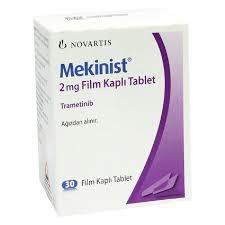
It should be noted that the efficacy of trametinib monotherapy in cholangiocarcinoma is still unclear, and its efficacy is closely related to specific mutations such as BRAF V600E. Therefore, not all patients with cholangiocarcinoma are suitable for use of this drug, and genetic testing must be performed to confirm whether there are relevant mutations in the patient's tumor. In addition, even if BRAF mutations are present, combined treatment with MEK inhibitors and BRAF inhibitors is needed to overcome the risk of resistance in single targeted therapy.
Although the application of trametinib in cholangiocarcinoma shows certain promise, it is also accompanied by some side effects during use, including rash, diarrhea, fatigue, and effects on heart function. Especially when used in combination with BRAF inhibitors, the risk of toxic side effects will increase accordingly. Therefore, the patient's tolerance needs to be closely monitored during treatment, and dosage adjustments or drug suspensions should be made if necessary. For elderly patients or those with other underlying diseases, more caution is required when using it.
Currently, multiple clinical trials are evaluating the potential application of trametinib and its combination with other targeted drugs in cholangiocarcinoma. For example, a clinical study led by NCI (National Cancer Institute) is evaluating Trametinib in combination with immunotherapy drugs to explore the role of MEK inhibitors in the regulation of the immune microenvironment. In addition, some pharmaceutical companies are also promoting a new generation of MEK inhibitors to more accurately intervene in the MAPK pathway, with the expectation that the treatment effect of cholangiocarcinoma will be further improved in the future.
In summary, trametinib, as a MEK inhibitor, can be effective in specific gene mutations (such as BRAF V600E shows good therapeutic potential in patients with cholangiocarcinoma, especially when combined with BRAF inhibitors such as dabrafenib, which may achieve longer progression-free survival than traditional treatments. However, this drug has not yet been widely included in the first-line treatment guidelines for cholangiocarcinoma, and its clinical application is still in the exploratory stage. For eligible patients, it is recommended to decide whether to use trametinib based on genetic testing results under the guidance of professional doctors, and participate in relevant clinical trials in regular medical institutions to obtain safer and more effective treatment opportunities. As research continues to deepen, trametinib is expected to provide more treatment options and longer survival hope for patients with cholangiocarcinoma.
Reference materials:https://go.drugbank.com/drugs/DB08911
[ 免责声明 ] 本页面内容来自公开渠道(如FDA官网、Drugs官网、原研药厂官网等),仅供持有医疗专业资质的人员用于医学药学研究参考,不构成任何治疗建议或药品推荐。所涉药品可能未在中国大陆获批上市,不适用于中国境内销售和使用。如需治疗,请咨询正规医疗机构。本站不提供药品销售或代购服务。


