
.jpeg)
Is Elemin’s baricitinib tablets really effective? What is the user feedback?
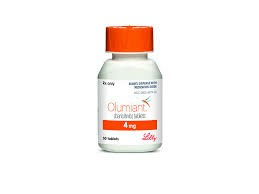
Baricitinib (Baricitinib) is an oral small molecule JAK inhibitor developed by Eli Lilly. The trade name is Olumiant, and its Chinese name is "Elamine Baricitinib Tablets". It has been approved for marketing in China and is included in medical insurance. It is an original drug. It is mainly used to treat patients with moderately to severely active rheumatoid arthritis (RA), especially those who have an inadequate response to one or more traditional DMARDs (such as methotrexate). In clinical practice in many countries and regions around the world, baricitinib has been proven to have good efficacy and safety, and Aleminib, as the representative of its original research drug launched in China, has also received a lot of positive feedback from doctors and patients.
From a pharmacological mechanism, baricitinib can specifically inhibit two key enzymesJAK1 and JAK2, blocking the signal transduction pathways of multiple cytokines (such as IL-6, IFN-γ, etc.), thereby inhibiting the inflammatory response and reducing joint synovitis and destruction. It is one of the important targeted immunomodulatory drugs in the current treatment of RA. Because it is an oral drug, it is easy to use and avoids the challenge of patient compliance with injectable biologics, so it is highly popular in actual treatment. For some patients whose long-term use of drugs such as methotrexate or sulfasalazine is ineffective or poorly tolerated, Ailemin provides an efficient and novel treatment option.
In terms of clinical application, many users have reported that symptoms such as joint swelling, morning stiffness, and limited activity have been significantly improved after taking Ailemin. Some patients' joint pain is significantly reduced and their quality of life is improved after using it for a few weeks. Some rheumatologists also pointed out that Ailemin has a relatively fast onset of action, and significant efficacy can still be observed in some patients who have poor response to TNF-α inhibitors, which shows that its mechanism is unique and its efficacy is complementary. In addition, Ailemin has a relatively mild impact on liver and kidney function during use, and is controllable with daily monitoring, making it suitable for long-term treatment. However, some patients have mentioned adverse reactions to the drug in their feedback, such as an increased risk of mild infections, changes in cholesterol or minor abnormalities in blood cell counts, etc. However, most of them can be well managed under the guidance of a doctor.
The biggest concern among users is often the balance between the sustainability of efficacy and safety. According to the recommendations of international authoritative guidelines (such as EULAR and ACR), baricitinib can achieve better response rates when combined with methotrexate. However, for individuals who are not suitable for combination therapy, the efficacy of single drug is also clinically significant. China's multi-center real-world data also supports this view, that is, Elemin exhibits a good response rate and an acceptable adverse reaction spectrum in RA patients. Patients generally believe that the drug is "smarter" than traditional DMARDs, with more predictable side effects and easier to adjust treatment plans.
From the perspective of drug quality, Ailemin, as Eli Lilly’s original drug, is guaranteed in terms of preparation technology, purity, and absorption speed. Its marketed version in China is equivalent to the products used in Europe and the United States, has consistent registration standards and quality control systems, and has more reliable clinical performance compared with some generic drugs or unapproved drugs.
Reference materials:https://go.drugbank.com/drugs/DB11817
[ 免责声明 ] 本页面内容来自公开渠道(如FDA官网、Drugs官网、原研药厂官网等),仅供持有医疗专业资质的人员用于医学药学研究参考,不构成任何治疗建议或药品推荐。所涉药品可能未在中国大陆获批上市,不适用于中国境内销售和使用。如需治疗,请咨询正规医疗机构。本站不提供药品销售或代购服务。


