
.jpeg)
How does the efficacy of neratinib/neratinib compare with nelarabine?
Although Neratinib and Nelarabine have similarities in their Chinese names, they are completely different in terms of drug structure, indications, mechanism of action, and treatment target groups. Therefore, a simple horizontal comparison of efficacy cannot be made. Instead, they should be analyzed based on their status and performance in their respective treatment fields. Neratinib is an oral pan-ErbB receptor irreversible tyrosine kinase inhibitor specifically used for HER2-positive breast cancer. Its targets include multiple ErbB family members such as HER1, HER2, and HER4, and it has the ability to inhibit the HER signaling pathway in a broad spectrum. Nelarabine is a prodrug-type purine analogue. Its active metabolite, arabinoside cytidine triphosphate (ara-GTP), is highly phosphorylated in T lymphocytes and inhibits DNA synthesis. It is highly selectively toxic to T cell-related leukemia and is mainly used to treat relapsed or refractory T-cell acute lymphoblastic leukemia (T-ALL) and T-cell lymphoblastic lymphoma (T-LBL).
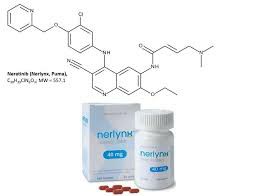
From the perspective of indications, the main users of neratinib are HER2-positive early or late breast cancer patients, especially in the continued consolidation phase after receiving adjuvant trastuzumab therapy. It reduces the risk of disease recurrence through sustained HER2 inhibition and is one of the key complementary drugs in the HER2 targeted therapy system. Neratinib is approved for adjuvant treatment in Europe and the United States, and has been included in the treatment sequence for HER2-positive breast cancer based on multiple real-world data and expert guidelines. Its oral dosage form makes it convenient for long-term maintenance treatment, especially for people at high risk of recurrence. In drug-resistant or metastatic breast cancer, neratinib also has research directions in combination with other drugs, such as combining with capecitabine to enhance the intensity of treatment, or exploring new strategies of combination immunotherapy.
Nelarabine is mainly used to treat leukemia or lymphoma patientsT cell subtype groups, and most of its use scenarios occur in the treatment stage after standard chemotherapy fails. Because T-cell leukemia is rare, the clinical use of nelarabine is relatively small, but it is still one of the important treatment options for these high-risk patients with poor prognosis. Mechanistically, the selective toxicity of nelarabine makes it have a relatively small impact on non-T cell lines, thus showing certain tolerability advantages in multi-line treatment. However, unlike molecular targeted drugs in breast cancer, nelarabine still belongs to the category of cytotoxic chemotherapy. Its side effects include neurotoxicity, bone marrow suppression and other adverse effects, and it needs to be closely monitored during use.
In terms of efficacy, if fromThe perspective of “which drug is more effective” is actually inappropriate because neratinib and nelarabine serve completely different clinical needs. Neratinib belongs to the category of HER2-targeted therapy for breast cancer, and its efficacy evaluation is mainly reflected in extending disease-free survival and reducing recurrence rate; while neratinib focuses on improving the survival chances of patients with relapsed/refractory T-ALL or T-LBL. Therefore, a more accurate comparison should be based on the therapeutic value and unique mechanisms of action of each in the disease type targeted. In other words, the two play an important role in their respective treatment fields, and their clinical significance cannot be judged by directly comparing the efficacy. Instead, precise drug selection should be based on the patient's disease type, previous treatment history, and individualized treatment goals.
Reference materials:https://en.wikipedia.org/wiki/Neratinib
[ 免责声明 ] 本页面内容来自公开渠道(如FDA官网、Drugs官网、原研药厂官网等),仅供持有医疗专业资质的人员用于医学药学研究参考,不构成任何治疗建议或药品推荐。所涉药品可能未在中国大陆获批上市,不适用于中国境内销售和使用。如需治疗,请咨询正规医疗机构。本站不提供药品销售或代购服务。


