
.jpeg)
Which dosage form of obeticholic acid capsules or tablets has better therapeutic effect?
Obeticholic acid(Obeticholic Acid is a farnesoid X receptor (FXR) agonist that has received widespread attention in the treatment of primary biliary cholangitis (PBC) in recent years. With the continuous expansion of its indications and the diversification of patient medication needs, the dosage form of obeticholic acid has gradually become a focus of clinical practice in overseas markets. The most common dosage forms of obeticholic acid are tablets, but pharmaceutical companies have begun to explore the development and clinical application of capsule dosage forms. This change is not just about the appearance of the dosage form, but may also involve key factors such as differences in pharmacokinetics, patient compliance, and efficacy. Therefore, it is necessary to conduct an in-depth analysis of the comparison of the therapeutic effects of the two dosage forms, especially in the special pathological context of hepatobiliary disease.
From the perspective of drug absorption and bioavailability, there may be differences in the dissolution rate and drug release time of tablets and capsules in the body. Obeticholic acid itself is a hydrophobic molecule with poor solubility. Especially in an environment where the pH of the gastrointestinal tract changes drastically, its absorption effect is easily affected by the dosage form. Tablets often use a compression molding process to control the drug release rate, and disintegrants can be added to improve bioavailability and ensure effective absorption of the drug in the small intestine. Capsule dosage forms rely on the gel shell to dissolve in the stomach to release the internal powder or liquid components. In contrast, the final concentration performance in plasma may be affected by factors such as different dissolution rates and uneven dose distribution. Therefore, in chronic treatment diseases where systemic blood concentration stabilization is the goal, traditional tablets have more reliable pharmacokinetic properties, which has been indirectly verified in the current application of obeticholic acid.
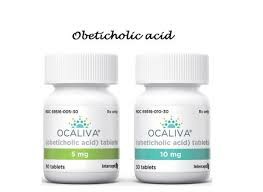
In terms of patient compliance, capsule dosage forms are generally considered easier to swallow and have a milder taste, especially for elderly patients with swallowing dysfunction or sensitivity to tablets. However, this advantage is not necessarily significant in patients with chronic liver diseases such as PBC. Because PBC mostly occurs in middle-aged and elderly women, long-term medication has become the norm for treatment. This group of people has a relatively high acceptance of drug specifications and medication methods, and is far less sensitive to dosage form conversion than children or people with swallowing disorders. Therefore, from a real clinical perspective, tablets are still the dosage form that patients are more accustomed to and doctors recommend, especially considering that most of the current clinical research data come from the tablet version.
From the perspective of drug stability and compatibility, tablet dosage forms usually have stronger physical and chemical stability and are not easily affected by external conditions such as humidity and temperature. Their storage and transportation conditions are easier to control, and are especially suitable for cross-regional supply. Capsules may have risks such as component migration and abnormal shell disintegration. Especially in the context of combined use of multiple drugs, their compatibility stability still needs further verification. Considering that PBC treatment is often combined with drugs such as ursodeoxycholic acid (UDCA), it is particularly important to choose a dosage form that is stable and easy to evaluate interactions.
It is worth noting that formal clinical research data on obeticholic acid capsule dosage forms are still relatively scarce, and the main data sources are still concentrated on the tablet version. Most studies on pharmacokinetics, pharmacodynamics, and long-term efficacy and safety are based on tablets, and there is no large-sample data to support the significant efficacy advantages of capsules. In addition, pharmaceutical process standardization and global regulatory pathways are also more biased towards the tablet version that has been launched. Therefore, even if capsules enter the market, it will be difficult to shake the dominant position of tablets in clinical practice within the foreseeable time.
Reference materials:https://en.wikipedia.org/wiki/Obeticholic_acid
[ 免责声明 ] 本页面内容来自公开渠道(如FDA官网、Drugs官网、原研药厂官网等),仅供持有医疗专业资质的人员用于医学药学研究参考,不构成任何治疗建议或药品推荐。所涉药品可能未在中国大陆获批上市,不适用于中国境内销售和使用。如需治疗,请咨询正规医疗机构。本站不提供药品销售或代购服务。


