
.jpeg)
What is the difference between the effects of Cabergoline and Nicergoline?
Although cabergoline and nicergoline have similar names and are both ergot derivatives, their pharmacological mechanisms, clinical uses, indications and therapeutic effects are essentially different. This article will compare the similarities and differences between the two in terms of drug action mechanism, indications, clinical efficacy and safety, etc., to help patients and medical staff correctly understand and choose appropriate drugs.
First of all, from the perspective of pharmacological mechanism, cabergoline is a potent and long-acting dopamineD2 receptor agonist, mainly by stimulating the hypothalamic-pituitary pathway The D2 receptor in the drug inhibits the secretion of prolactin (PRL), so it is widely used in the treatment of hyperprolactinemia, pituitary prolactinoma, and adjuvant treatment of Parkinson's disease. Nicergoline is a selective α-1 adrenergic receptor antagonist. It also has the effects of anti-platelet aggregation, promoting cerebral blood flow and improving neurometabolism. It is mainly used to treat chronic cerebrovascular diseases such as Alzheimer's disease, sequelae of cerebral infarction, and insufficient cerebral blood supply.
Secondly, from the perspective of indications, cabergoline is mainly used for endocrine and neurological diseases, especially in infertility, menstrual disorders and male sexual dysfunction caused by hyperprolactinemia. Its long-acting properties allow it to be taken only 1 to 2 times a week, with good patient compliance. In contrast, nicergoline is mainly used in neurology and geriatrics. Its indications include cerebral arteriosclerosis, memory loss caused by reduced cerebral blood flow, dizziness, inattention and other symptoms. It can improve brain microcirculation in the elderly and delay cognitive decline. It is one of the first-line auxiliary drugs for the treatment of Alzheimer's disease.
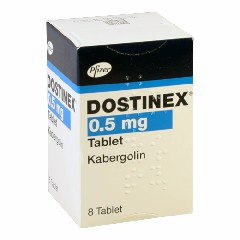
Looking at the therapeutic effect, cabergoline has definite efficacy in controlling prolactin levels. Most patients can see a decrease in prolactin levels, a reduction in the size of pituitary tumors, and significant improvement in related symptoms (such as amenorrhea, infertility, etc.) within a few weeks of taking the drug. In addition, in the early stages of Parkinson's disease, cabergoline can also be used as an adjunct to levodopa to improve motor symptoms. Although nicergoline does not directly treat a specific cause, it has a long-term and stable improvement effect in patients with chronic cerebral insufficiency. Especially for patients with mild to moderate Alzheimer's disease and cerebral infarction sequelae, it can effectively improve memory, language and emotional disorders and improve the quality of life.
Finally, in terms of side effects and safety, cabergoline is generally well tolerated. However, when used in large doses or for a long time, it may cause adverse reactions such as nausea, hypotension, constipation, dizziness, and even heart valve fibrosis. Therefore, cardiac function and blood pressure need to be monitored regularly under the guidance of a doctor. Nicergoline has relatively few side effects, generally mild gastrointestinal discomfort, hypotension or mild drowsiness, but it may also cause rash or liver function fluctuations in some patients. Therefore, it is necessary to pay attention to individual dosage adjustments and drug interactions when using both, especially when combined with other chronic diseases, the risks must be carefully assessed.
In summary, although cabergoline and nicergoline are both ergot derivatives, their mechanisms of action and therapeutic areas are completely different. Cabergoline is good at regulating hormone levels and is suitable for pituitary gland-gonadal axis-related diseases; while nicergoline mainly improves cerebral blood flow and cognitive function and is suitable for patients with neurodegenerative diseases and cerebrovascular diseases. Clinically, the two cannot replace each other. They should be used under the guidance of a professional doctor after a clear diagnosis based on the cause of the disease. For patients, understanding the differences between drugs can help them coordinate treatment more scientifically and improve the effectiveness and safety of medication.
Reference materials:https://my.clevelandclinic.org/health/drugs/20863-cabergoline-tablets
[ 免责声明 ] 本页面内容来自公开渠道(如FDA官网、Drugs官网、原研药厂官网等),仅供持有医疗专业资质的人员用于医学药学研究参考,不构成任何治疗建议或药品推荐。所涉药品可能未在中国大陆获批上市,不适用于中国境内销售和使用。如需治疗,请咨询正规医疗机构。本站不提供药品销售或代购服务。


