
.jpeg)
Is the actual cure rate of Axitinib targeted therapy high?
Axitinib is an oral, small-molecule tyrosine kinase inhibitor mainly used to treat advanced renal cell carcinoma, especially in patients who are resistant to initial treatment. It effectively blocks tumor angiogenesis by targeting and inhibiting vascular endothelial growth factor receptors (VEGFR) 1, 2 and 3, thereby inhibiting tumor growth and spread. Although axitinib is effective in controlling the disease, as a targeted therapy drug, its actual "cure" rate is still low. It is more about delaying disease progression and improving quality of life.
In clinical studies, axitinib demonstrated higher disease control rates and longer progression-free survival (PFS). Especially in a clinical trial called AXIS, compared with sorafenib, the median progression-free survival of patients in the axitinib group was significantly longer, reaching 6.7 months. For some patients who respond well to treatment, their tumors can shrink significantly or even achieve partial response (PR). However, cases that truly achieve "complete remission" or even long-term "cure" are extremely rare, and the vast majority of patients eventually still face the challenge of disease recurrence or progression.
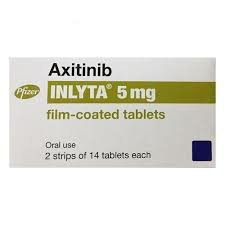
From the actual treatment situation, axitinib is more commonly used as a second-line or third-line treatment drug. The main purpose is to prolong survival and stabilize the disease rather than to completely eliminate the tumor. In some patients, axitinib has also been combined with immune checkpoint inhibitors such as pembrolizumab, which is expected to further improve the response rate and prolong survival time. However, even under these combination regimens, clinical "cure" results are rarely seen.
To sum up, axitinib has certain efficacy in targeted therapy, especially in specific patient groups, which can achieve longer disease control time. However, its "cure rate" is relatively low, and it is regarded more as a drug that prolongs life, improves symptoms, and controls the disease. When patients are treated with axitinib, they should maintain reasonable expectations, actively cooperate with doctors for regular follow-up and evaluation, and adjust treatment strategies in a timely manner to achieve maximum treatment benefits.
Reference materials:https://en.wikipedia.org/wiki/Axitinib
[ 免责声明 ] 本页面内容来自公开渠道(如FDA官网、Drugs官网、原研药厂官网等),仅供持有医疗专业资质的人员用于医学药学研究参考,不构成任何治疗建议或药品推荐。所涉药品可能未在中国大陆获批上市,不适用于中国境内销售和使用。如需治疗,请咨询正规医疗机构。本站不提供药品销售或代购服务。


