
.jpeg)
Alternative regimens after resistance to trametinib and dabrafenib
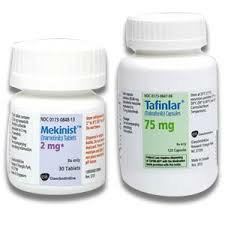
Trametinib and dabrafenib are targeted drugs used to treat BRAF mutation-positive tumors, especially melanoma, non-small cell lung cancer and other types of cancer. Although these two drugs can effectively inhibit tumor growth in the early stages, some patients may develop drug resistance as treatment progresses. The emergence of drug resistance is a common challenge in cancer treatment, so understanding alternative treatment options after drug resistance is critical. Possible alternative treatment options after resistance to trametinib and dabrafenib are discussed in detail below.
1. Causes of resistance to trametinib (Trametinib) and dabrafenib (Dabrafenib)
Trametinib and dabrafenib can effectively inhibit the proliferation of BRAF mutation-positive tumor cells when used in combination. As a BRAF inhibitor, dabrafenib can specifically inhibit the activation of BRAF V600 mutations, while trametinib, as a MEK inhibitor, inhibits the activation of downstream signaling pathways. This combination therapy enhances the anti-tumor effect by targeting different key enzymes. However, over time, tumor cells may develop drug resistance through genetic mutations, changes in drug metabolism pathways, or reconstruction of intracellular signaling pathways. Common resistance mechanisms include changes in the mutation sites targeted by BRAF inhibitors, or continued activation of the MEK pathway through other pathways, resulting in reduced drug efficacy.
2. Alternatives to immunotherapy
Immune checkpoint inhibitors, such asPD-1 inhibitors (such as nivolumab (Nivolumab) and pembrolizumab Anti-(Pembrolizumab)) and PD-L1 inhibitors have shown significant efficacy in a variety of cancer types. Immunotherapy may be an effective alternative for patients who are resistant to the combination of trametinib and dabrafenib. Especially for BRAF mutation-positive melanoma patients, immune checkpoint inhibitors can exert anti-tumor effects by restoring the immune system's recognition and attack of tumor cells. Research suggests that immune checkpoint inhibitors may provide temporary effective responses through different mechanisms in drug-resistant patients, especially those with tumors with high mutational load.
3. Other alternatives to targeted drugs
In addition to immunotherapy, other targeted drugs targeting different targets are also possible alternatives after drug resistance. For patients with positive BRAF mutations, if drug resistance is due to further activation of the BRAF or MEK pathways, other targeted drugs can be considered for treatment. For example, bevacizumab (Bevacizumab) can be used as an anti-angiogenic treatment, indirectly inhibiting tumor growth by inhibiting the formation of new blood vessels in tumors. On the other hand, inhibitors targeting the PI3K/AKT/mTOR pathway, such as apatinib (Apatinib) or remosvir (Everolimus), may also become alternative treatment options. These drugs block the proliferation of tumor cells through different signaling pathways, thereby overcoming the resistance problem of traditional targeted drugs.
4. Combination treatment strategy
For patients with drug-resistantBRAF mutation-positive tumors, combination treatment strategies are a hot topic in current research. By combining multiple drugs, especially targeted drugs with immunotherapy, the limitations of single treatments can be overcome. Studies have shown that the combined application of BRAF inhibitors and immune checkpoint inhibitors may have a synergistic effect in certain tumor types. Specifically, BRAF inhibitors block the growth signals of tumor cells, while immunotherapy restores the function of the immune system and promotes immune cells to recognize and attack tumors. This combination therapy can provide more durable anti-tumor effects after resistance develops, especially in tumor types such as melanoma.
5. Clinical Trials and Personalized Treatment
For patients with drug resistance, participation in clinical trials is also an important alternative treatment avenue. Clinical trials provide patients with the opportunity to use novel treatments, which may include drugs that target newly discovered targets in tumors or new immunotherapy drugs. The development of personalized treatment plans requires genomic analysis and tumor molecular characteristics to determine the best treatment strategy. Through detailed analysis of patient tumors, the mechanisms of resistance can be determined, and appropriate targeted drugs or combination treatment strategies can be selected based on this.
Trametinib and dabrafenib are important drugs for the treatment ofBRAF mutation-positive tumors. Although they have significant efficacy in initial treatment, the emergence of drug resistance makes patients face the challenge of treatment selection in the later stages. In the setting of drug resistance, immunotherapy, other targeted drugs, and combination treatment strategies have become important alternatives. At the same time, participating in clinical trials is also a feasible treatment avenue, providing patients with more choices. Ultimately, the treatment plan should be personalized based on the patient's specific situation and resistance mechanisms to ensure the best therapeutic effect.
Reference materials:https://go.drugbank.com/drugs/DB08911
xa0
[ 免责声明 ] 本页面内容来自公开渠道(如FDA官网、Drugs官网、原研药厂官网等),仅供持有医疗专业资质的人员用于医学药学研究参考,不构成任何治疗建议或药品推荐。所涉药品可能未在中国大陆获批上市,不适用于中国境内销售和使用。如需治疗,请咨询正规医疗机构。本站不提供药品销售或代购服务。


