
.jpeg)
Recommended administration method and dosage of trametinib
Trametinib (Trametinib) is a selective MEK1 and MEK2 inhibitor. It is an anti-cancer targeted therapy drug and is mainly used to treat BRAF V600EorV600K mutation-positive melanoma, non-small cell lung cancer, and certain other solid tumors. It is often used in combination with the BRAF inhibitor dabrafenib (Dabrafenib) to enhance the therapeutic effect and delay the occurrence of drug resistance. In order to ensure the efficacy and reduce adverse reactions, it is very important to correctly grasp the recommended taking method and dosage of trametinib.
In clinical application, the standard recommended dose of trametinib is 2 mg once daily, orally. Patients should take medications at a fixed time every day to maintain stable drug concentrations in the body. It is important to note that trametinib must be taken on an empty stomach. The specific requirement is that it should be taken at least 1 hours before eating or at least 2 hours after eating. This is because food will affect the absorption efficiency of trametinib, which may cause fluctuations in blood drug concentration, thereby affecting efficacy and safety.
The recommended course of treatment with trametinib is usually continued until disease progression or unacceptable adverse effects occur. Most patients will undergo regular tumor evaluation during the initial stage of taking the drug, such as imaging examinations such as CT or MRI to judge the efficacy. If combined with dabrafenib, the two drugs need to be taken simultaneously, but the time between the two drugs can be separated, as long as the doctor's advice is followed. Clinical trials have confirmed that the therapeutic effect of trametinib combined with dabrafenib is significantly better than monotherapy, especially in terms of improving progression-free survival and overall survival.
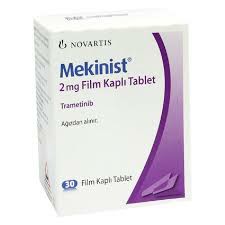
During the treatment process, patients may experience varying degrees of adverse reactions, such as rash, diarrhea, edema, abnormal cardiac function, vision problems, etc. If serious side effects occur, your doctor may recommend temporarily stopping the medication or adjusting the dose. Depending on the patient's tolerance, the dose of trametinib can be adjusted down to 1.5 mg or 1 mg once daily, or even lower. Dosage adjustment should be strictly based on the guidance of professional physicians and should not be changed without authorization to avoid affecting the efficacy or aggravating toxic and side effects.
In addition, patients should avoid taking trametinib in combination with certain drugs, such as strong CYP3A4 inducers or inhibitors (such as rifampicin, ketoconazole, etc.), because they may interfere with the metabolism of trametinib in the body, resulting in reduced drug efficacy or increased toxicity. Also, avoid consuming grapefruit or its juice, as components may also affect the metabolic pathways of trametinib.
In short, as a targeted therapy drug, the efficacy and safety of trametinib largely depend on scientific and standardized medication administration and continuous medical monitoring. Patients need to maintain close communication with their doctors during the medication process, follow individualized treatment plans, monitor side effects on time, and make necessary lifestyle adjustments. Correctly mastering the taking method and dosage will not only help to maximize the therapeutic potential of trametinib, but also help patients benefit more safely and long-term.
Reference materials:https://go.drugbank.com/drugs/DB08911
[ 免责声明 ] 本页面内容来自公开渠道(如FDA官网、Drugs官网、原研药厂官网等),仅供持有医疗专业资质的人员用于医学药学研究参考,不构成任何治疗建议或药品推荐。所涉药品可能未在中国大陆获批上市,不适用于中国境内销售和使用。如需治疗,请咨询正规医疗机构。本站不提供药品销售或代购服务。


