
.jpeg)
How long does it take for patients with EGFR mutated lung cancer to undergo genetic testing when taking dacomitinib?
During the treatment of EGFR mutated non-small cell lung cancer patients with dacomitinib/Dacomitinib (Dacomitinib), the time point of genetic testing directly affects subsequent treatment decisions. Usually, clear EGFR mutation before initial treatment is a prerequisite for the use of dacomitinib, and common mutations such as Exon 19 deletion or L858R are highly sensitive to it. However, as the drug treatment time is prolonged, tumor cells will gradually develop drug resistance mechanisms. At this time, genetic testing needs to be performed again to clarify the type of drug resistance mutations and guide subsequent targeted therapy selection.
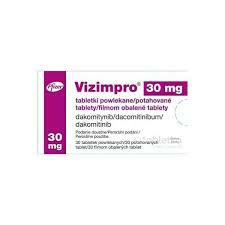
In clinical practice, the most critical time point for genetic testing is when the disease progresses or drug resistance appears. Progress can be manifested by the appearance of new lesions on imaging, the enlargement of existing lesions, or the worsening of clinical symptoms, such as coughing and worsening chest pain. Once these conditions are discovered, a liquid biopsy (egctDNA) or a tissue biopsy for comprehensive molecular analysis should be performed as soon as possible. Especially among the common resistance mechanisms after using dacomitinib, including T790M mutation, HER2 amplification, MET amplification, PIK3CA mutation or small cell lung cancer transformation, high-throughput detection technologies such as NGS can provide direct evidence for subsequent drug selection.
For some patients, if the curative effect is stable, frequent testing is usually not recommended. However, some studies have pointed out that even if there is no obvious progress, regular ctDNA dynamic monitoring (such as every6-12 months) can detect molecular-level mutation trends early. Therefore, it is recommended to clarify the type of gene mutation before using dacomitinib for the first time, pay close attention to disease changes during treatment, and immediately initiate a secondary molecular testing process once progression is discovered, so as to transition to osimertinib or other targeted regimens more quickly and prolong disease control time.
Reference materials:https://www.pfizer.com/products/product-detail/vizimpro
[ 免责声明 ] 本页面内容来自公开渠道(如FDA官网、Drugs官网、原研药厂官网等),仅供持有医疗专业资质的人员用于医学药学研究参考,不构成任何治疗建议或药品推荐。所涉药品可能未在中国大陆获批上市,不适用于中国境内销售和使用。如需治疗,请咨询正规医疗机构。本站不提供药品销售或代购服务。


