
.jpeg)
How does the effect of Gilteritinib change after six months of taking it?
Gilitinib is an oral FLT3 inhibitor, mainly used to treat patients with relapsed or refractory FLT3 mutation-positive acute myeloid leukemia (AML). Its mechanism of action is to specifically inhibit the tyrosine kinase activity of the FLT3 receptor, thereby blocking the proliferation signals of tumor cells. Many patients can observe an improvement in blood indicators or a decrease in the number of leukemia cells within the first few weeks to months after starting to take giritinib, and the initial effect is more obvious.
The effects of taking giritinib after six months vary from person to person. If some patients achieve complete remission or partial remission in the early stages of treatment, they can usually maintain stable disease control at six months, and can even be used as a bridge to bone marrow transplantation to improve long-term survival rates. Clinical data shows that some patients can achieve longer disease-free survival after taking giritinib and effectively delay the progression of the disease.
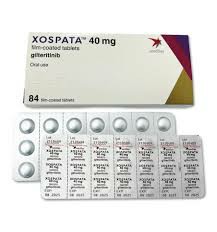
But not all patients maintain good results after six months. Some patients may have a weakened therapeutic effect due to drug-resistant mutations (such as activation of the RAS/MAPK pathway or structural changes in the FLT3 receptor), which may manifest as worsening of the blood picture and re-increase of leukemia cells. In addition, a small number of patients need to reduce the dosage or suspend medication due to side effects such as abnormal liver function, prolonged QT interval, muscle weakness, etc. during the treatment process, which affects the continuity and effect of treatment.
In general, giritinib has shown a good response rate and disease control ability in the treatment of FLT3mutation-positive AML , but the long-term efficacy still needs to be comprehensively evaluated based on factors such as individual condition, mutation type, medication compliance, and whether to be combined with other treatments. It is recommended that patients undergo regular bone marrow examination, molecular testing and imaging evaluation after six months of use to judge the efficacy and adjust the treatment plan in a timely manner.
Reference materials:https://www.xospata.com/
[ 免责声明 ] 本页面内容来自公开渠道(如FDA官网、Drugs官网、原研药厂官网等),仅供持有医疗专业资质的人员用于医学药学研究参考,不构成任何治疗建议或药品推荐。所涉药品可能未在中国大陆获批上市,不适用于中国境内销售和使用。如需治疗,请咨询正规医疗机构。本站不提供药品销售或代购服务。


