
.jpeg)
What type of therapeutic drug does enzalutamide/enzalutamide belong to?
Enzalutamide/Enzalutamide ( Enzalutamide) belongs to the class of androgen receptor signaling inhibitors and is a new second-generation androgen receptor antagonist. Compared with traditional anti-androgen drugs, enzalutamide has a more comprehensive and in-depth mechanism of action and is classified as a "non-steroidal androgen receptor inhibitor". It interferes with the androgen receptor pathway through multiple mechanisms. It not only effectively blocks the binding of androgen to its receptor, but also prevents the receptor from entering the cell nucleus and inhibits its activation of downstream target genes, thus comprehensively blocking the growth of androgen-driven cancer cells.
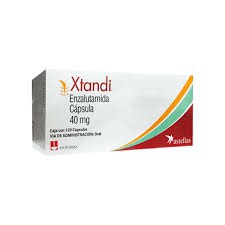
This class of drugs is particularly suitable for the treatment of advanced stages of castration-resistant prostate cancer (CRPC) and metastatic castration-sensitive prostate cancer (mCSPC). In the occurrence and development of prostate cancer, the androgen signaling pathway plays a key role in promoting prostate cancer. Even after receiving testosterone deprivation therapy, cancer cells may continue to grow by synthesizing themselves androgens or amplifying receptor signals. The mechanism of enzalutamide is the targeted suppression of this residual signal, allowing it to play an important role in key nodes of tumor progression.
In addition, enzalutamide is an oral drug with good patient compliance and convenience. It does not require frequent injections or hospitalization during the treatment process, and is especially suitable for people with chronic cancer who require long-term management. Compared with first-generation antiandrogens (such as bicalutamide), enzalutamide has a higher binding affinity and can also overcome resistance to AR mutations, making it more widely applicable in clinical treatment.
It is worth noting that although enzalutamide belongs to the category of anti-androgens, its multi-target properties give it a unique position in anti-tumor mechanisms. Currently, it has been included in the standard treatment guidelines for prostate cancer in many countries and regions and serves as an important part of the first-line or second-line regimen for advanced prostate cancer.
Reference materials:https://www.xtandi.com/
[ 免责声明 ] 本页面内容来自公开渠道(如FDA官网、Drugs官网、原研药厂官网等),仅供持有医疗专业资质的人员用于医学药学研究参考,不构成任何治疗建议或药品推荐。所涉药品可能未在中国大陆获批上市,不适用于中国境内销售和使用。如需治疗,请咨询正规医疗机构。本站不提供药品销售或代购服务。


