
.jpeg)
Can venetoclax alone treat myeloid leukemia?
Venetoclax (also known as Venetoclax in Chinese) is an oral BCL-2 inhibitor. In recent years, it has been widely used to treat a variety of hematological malignancies, especially showing important value in the treatment of acute myeloid leukemia (AML). However, the question of "whether venetoclax alone can treat myeloid leukemia" still needs to be analyzed in detail from its pharmacological mechanism, clinical research data and treatment plan design.
The mechanism of action of venetoclax is to induce tumor cell apoptosis by selectively inhibiting BCL-2 protein. BCL-2 is an anti-apoptotic protein overexpressed in a variety of leukemia cells. It can prolong the survival time of leukemia cells and lead to disease progression. By inhibiting BCL-2, venetoclax causes leukemia cells to lose their "protection" from apoptosis, ultimately promoting their natural death. Because of this, venetoclax has gained widespread acceptance in the treatment of chronic lymphocytic leukemia (CLL) and is approved for monotherapy.
However, venetoclax is not recommended for use alone in the treatment of acute myeloid leukemia (AML). AML is a rapidly progressive and heterogeneous disease, and its cells are not uniformly sensitive to BCL-2 inhibition. A large number of clinical studies have shown that although some patients can obtain short-term remission when using venetoclax alone to treat AML, the overall efficacy is not ideal and lasts short. Therefore, current international mainstream guidelines do not recommend venetoclax as a single-agent treatment option for AML.
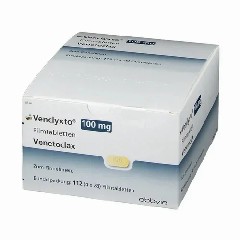
A more common and effective approach is to combine venetoclax with other lower-intensity chemotherapy drugs, such as decitabine or azacitidine. This type of combination treatment of "low-intensity chemotherapy + targeted drugs" is particularly suitable for elderly patients who cannot tolerate high-intensity chemotherapy or those in poor physical condition. In these combination treatment regimens, venetoclax plays a role in amplifying apoptotic signals, and combined use can enhance cytotoxicity, thereby achieving better therapeutic effects. Multiple phase III clinical studies have shown that this combination treatment can increase the complete response rate to more than 60%, and the disease-free survival time of some patients even exceeds 12 months.
In addition, it is worth noting that although venetoclax combination therapy has significant efficacy, it is also associated with a higher risk of myelosuppression, especially neutropenia and infection risk. Therefore, during the treatment of AML with venetoclax, doctors usually adjust the dose according to the patient's tolerance and closely monitor blood routine, liver and kidney function, and possible side effects. Ramp-up doses (ramp-up) are often used in the initial stage of drugs to reduce the risk of tumor lysis syndrome.
In summary, venetoclax is not suitable as the first choice monotherapy for the treatment of myeloid leukemia. Although it has a clear anti-leukemia mechanism as a targeted drug, it still needs to be used in combination with low-intensity chemotherapy drugs to achieve ideal efficacy in the treatment of AML. For elderly or frail patients who are not suitable for high-intensity treatment, venetoclax combined with low-dose chemotherapy can provide a relatively safe and effective treatment strategy. Therefore, it is recommended that patients undergo professional evaluation by a hematology oncologist and develop an individualized treatment plan before starting treatment.
Reference materials:https://www.venclexta.com/
[ 免责声明 ] 本页面内容来自公开渠道(如FDA官网、Drugs官网、原研药厂官网等),仅供持有医疗专业资质的人员用于医学药学研究参考,不构成任何治疗建议或药品推荐。所涉药品可能未在中国大陆获批上市,不适用于中国境内销售和使用。如需治疗,请咨询正规医疗机构。本站不提供药品销售或代购服务。


