
.jpeg)
Differences between Adagrasib and Sotorasib
Adagrasib and sotorasib (Sotorasib) are two targeted drugs specifically used to treat KRAS G12C mutations. KRAS mutations, especially the G12C site mutations, are found in non-small cell lung cancer (NS CLC (CLC) accounts for about 13% and has long been regarded as a "difficult-to-drug" target. It was not until the advent of these two drugs that the treatment deadlock was broken. Although they are all KRAS G12C inhibitors, they have obvious differences in structure, metabolic properties, clinical efficacy, adverse reactions, etc.
First of all, from the perspective of drug structure and pharmacokinetics, although adagrasiib and sotoracib have the same target, they have differences in half-life and in vivo activity. Adagrasiib has a long half-life (approximately 23 hours), while sotolazeib has a relatively short half-life (approximately 5.5 hours). This means that adagrasiib can maintain a more stable drug concentration in the body, so it is usually administered twice a day; while sotoprazib is taken once a day. In addition, adagrasib has relatively high bioavailability and strong permeability, which may theoretically make it easier to penetrate certain tissue barriers, including the central nervous system.
Secondly, from the perspective of clinical efficacy, both of them have remarkable performance in treating KRAS G12C mutated non-small cell lung cancer. According to Soto Rasib'sCodeBreaK 100Clinical research data, among NSCLC patients who have received treatment, the objective response rate (ORR) is 37%, with a median of no progression Survival (PFS) was 6.3 months, and median overall survival (OS) was approximately 12.5 months. In contrast, adagrasib performed in the KRYSTAL-1 study with an ORR of 43%, medianPFS is 6.5 months, and OS is 12.6 months. From the data point of view, the efficacy of the two is similar, but adagrasib shows potential advantages in some subgroups (such as patients with brain metastases).
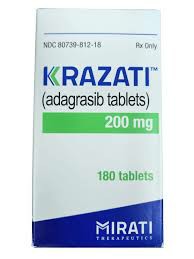
One of the highlights of adagrasib is its ability to control brain metastasis. In the KRYSTAL-1 study, the response rate of adagrasib in patients with brain metastases was close to 33%, suggesting that it has certain penetration into the central nervous system. There is relatively little data on brain metastasis of sotorasibu. Although there are some empirical cases supporting its certain effect, no systematic conclusion has been formed yet. Therefore, adagrasib may be a better choice for patients with brain metastases.
In terms of safety, the types of adverse reactions of the two drugs are similar, but the incidence rates are different. The adverse reactions of sotoracib are mostly mild to moderate, including diarrhea, nausea, fatigue, elevated liver enzymes, etc., and are tolerated by the vast majority of patients. The incidence of adverse reactions with adagrasib is slightly higher, and some patients will experience more obvious gastrointestinal reactions (such as diarrhea, nausea, vomiting) and liver function abnormalities. It should be pointed out that some patients with adagrasib need to reduce the dose or temporarily discontinue the drug due to side effects, which should be paid attention to in clinical use.
In terms of time to market and accessibility, sotoraxib, as the world's first KRAS G12C inhibitor, was the first to receive FDA approval in the United States in 2021 and was subsequently launched in many countries, including China. Adagrasiib, on the other hand, was a little later and received accelerated approval from the FDA in 2022. It has not yet been officially launched in China, so Chinese patients can only obtain the drug through overseas channels for the time being. This difference in time to market also affects the breadth of clinical application and medical insurance accessibility of drugs.
In terms of price, since sotoracib is already on the market in China, its cost may be included in medical insurance or clinical assistance projects in some areas, thereby reducing the burden on patients. Adagrasib is an unmarketed drug and relies on overseas purchases, which is relatively more expensive and faces challenges in availability and quality assurance.
In summary, sotorasibu and adagrasiib, as KRAS G12C targeted drugs, are equally effective in treatment, and each has its own advantages. Sotoracib is suitable for patients who pursue long-term stable control and are more sensitive to adverse reactions; adagrasiib may be more suitable for patients with brain metastases or who want to obtain broader systemic control. The difference between the two reminds clinicians to comprehensively consider genetic test results, disease complexity and the patient's personal condition when formulating treatment plans to achieve personalized medication.
References:https://www.krazati.com/
[ 免责声明 ] 本页面内容来自公开渠道(如FDA官网、Drugs官网、原研药厂官网等),仅供持有医疗专业资质的人员用于医学药学研究参考,不构成任何治疗建议或药品推荐。所涉药品可能未在中国大陆获批上市,不适用于中国境内销售和使用。如需治疗,请咨询正规医疗机构。本站不提供药品销售或代购服务。


