
.jpeg)
Which generation of targeted drug therapy does Adagrasib belong to?
Adagrasib is a targeted drug and belongs to the third generation of targeted drugs. Targeted drug therapy is one of the major advances in the field of cancer treatment in recent years. It mainly works by targeting specific molecular targets in tumor cells and minimizing damage to normal cells. Targeted drugs can be divided into different generations according to different targets, and adagrasib is a typical representative of the third generation.
As a third-generation targeted drug, adagrasib has stronger targeting and higher selectivity, and mainly acts on cancers with KRAS G12C mutations. KRAS mutations have always been difficult to treat because mutant forms of the gene often exhibit activity that is difficult to suppress. By precisely targeting the KRAS G12C mutation, adagrasib can effectively inhibit the growth of tumor cells and overcome the limitations of second-generation drugs in the face of this mutation. Therefore, adagrasib has made an important breakthrough in the field of targeted therapy.
The third generation of targeted drugs, such as adagrasib, not only improves treatment specificity and reduces the impact on normal cells, but also makes breakthroughs in solving tumor drug resistance. Therefore, adagrasib is considered an important drug in the current treatment of KRAS mutation-related cancers (such as non-small cell lung cancer, colorectal cancer, etc.), and has demonstrated significant clinical efficacy. As research deepens, third-generation targeted drugs may further change the landscape of tumor treatment.
Reference: https://www.krazati.com/
The first generation of targeted drugs are mainly early targeted therapeutic drugs, which usually act on epidermal growth factor receptor (EGFR), HER2 and other targets on tumor cells. The advent of these drugs has significantly improved outcomes for cancer patients, especially in the treatment of cancers such as non-small cell lung cancer. However, as tumor cells tend to develop drug resistance, the effectiveness of these drugs may gradually diminish over time.
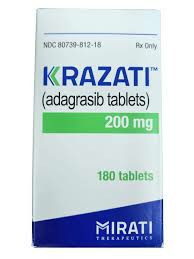
As a third-generation targeted drug, adagrasib has stronger targeting and higher selectivity, and mainly acts on cancers with KRAS G12C mutations. KRAS mutations have always been difficult to treat because mutant forms of the gene often exhibit activity that is difficult to suppress. By precisely targeting the KRAS G12C mutation, adagrasib can effectively inhibit the growth of tumor cells and overcome the limitations of second-generation drugs in the face of this mutation. Therefore, adagrasib has made an important breakthrough in the field of targeted therapy.
The third generation of targeted drugs, such as adagrasib, not only improves treatment specificity and reduces the impact on normal cells, but also makes breakthroughs in solving tumor drug resistance. Therefore, adagrasib is considered an important drug in the current treatment of KRAS mutation-related cancers (such as non-small cell lung cancer, colorectal cancer, etc.), and has demonstrated significant clinical efficacy. As research deepens, third-generation targeted drugs may further change the landscape of tumor treatment.
Reference: https://www.krazati.com/
[ 免责声明 ] 本页面内容来自公开渠道(如FDA官网、Drugs官网、原研药厂官网等),仅供持有医疗专业资质的人员用于医学药学研究参考,不构成任何治疗建议或药品推荐。所涉药品可能未在中国大陆获批上市,不适用于中国境内销售和使用。如需治疗,请咨询正规医疗机构。本站不提供药品销售或代购服务。


