
.jpeg)
Is erlotinib suitable for all patients with non-small cell lung cancer?
Erlotinib (Erlotinib) is not suitable for all non-small cell lung cancer (NSCLC) patients, and its efficacy is highly dependent on the mutation status of the EGFR gene. As the first-generation EGFR tyrosine kinase inhibitor developed by the American company Genentech, erlotinib's mechanism of action is to target the EGFR signaling pathway to prevent the growth and spread of cancer cells. The study found that the drug is particularly effective in patients carrying EGFR-sensitive mutations. The main mutation types include exon 19 deletion and exon 21 L858R point mutation.
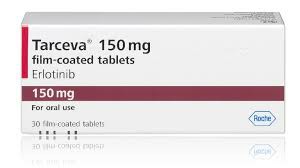
In 2005, the BR.21 study first confirmed that erlotinib can significantly prolong survival after chemotherapy failure. Subsequent studies in Asian populations further showed that it can significantly improve progression-free survival and overall survival in EGFR mutation-positive patients. For example, in the IPASS study, when EGFR-TKIs such as erlotinib were used to treat Asian patients with positive EGFR mutations, the median progression-free survival could reach 9-13 months. For patients with negative EGFR mutations, the efficacy of erlotinib decreases significantly and is often no better than chemotherapy or even has no significant benefit. Therefore, it is not recommended for initial treatment of such patients. Current international treatment guidelines, including NCCN and ESMO, recommend that EGFR mutation testing must be performed before using erlotinib to achieve precise treatment.
With the widespread use of third-generation EGFR-TKIs (such as osimertinib), the use of erlotinib in first-line treatment has gradually decreased, but it still has certain clinical value in specific populations or economically restricted areas. It is worth noting that the side effects of erlotinib are relatively controllable, and common ones include rash, diarrhea, loss of appetite, etc.
In summary, erlotinib is not suitable for all NSCLC patients, but is highly dependent on molecular typing and needs to be screened for EGFR mutations to maximize therapeutic benefits.
Reference materials:https://en.wikipedia.org/wiki/Erlotinib
[ 免责声明 ] 本页面内容来自公开渠道(如FDA官网、Drugs官网、原研药厂官网等),仅供持有医疗专业资质的人员用于医学药学研究参考,不构成任何治疗建议或药品推荐。所涉药品可能未在中国大陆获批上市,不适用于中国境内销售和使用。如需治疗,请咨询正规医疗机构。本站不提供药品销售或代购服务。


