
.jpeg)
What is the difference between erlotinib and osimertinib (third generation EGFR-TKI)
Although Erlotinib and Osimertinib are both epidermal growth factor receptor (EGFR) tyrosine kinase inhibitors (TKIs), they have significant differences in their research and development background, mechanism of action, clinical indications, therapeutic effects, and resistance mechanisms. Erlotinib is the first-generation EGFR-TKI and was approved by the FDA as early as 2004 for the second-line treatment of advanced non-small cell lung cancer (NSCLC); while osimertinib is a third-generation EGFR-TKI. FR-TKI was first approved in 2015. It was originally designed to solve the problem of T790M resistance mutation that appeared after first- and second-generation EGFR-TKI treatment, while retaining high affinity for sensitive mutations (such as exon 19 deletion and L858R mutation).
In terms of molecular mechanism, erlotinib reversibly inhibits EGFR kinase activity, mainly targeting cancer cells with EGFR-sensitive mutations, but it also inhibits wild-type EGFR, so side effects such as rash and diarrhea are more common. Osimertinib is an irreversible inhibitor that can specifically target EGFR sensitive mutations and T790M resistant mutations. It also has less impact on wild-type EGFR activity, so it is better tolerated and the incidence and severity of adverse reactions are generally low. Osimertinib also has good blood-brain barrier penetration ability, which is particularly important for patients with EGFR mutant lung cancer who are prone to brain metastasis. Clinical data show that osimertinib is significantly better than erlotinib in controlling brain metastases, and therefore has important value in patients with advanced NSCLC, especially those with central nervous system lesions.
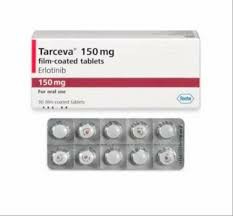
In terms of therapeutic effect, osimertinib performed better than erlotinib in multiple key clinical studies. The most representative one is the FLAURA study, which compares the efficacy of osimertinib with first-generation EGFR-TKIs (including erlotinib and gefitinib) in the first-line treatment of patients with EGFR mutation-positive NSCLC. The results showed that the median progression-free survival (PFS) of the osimertinib group was 18.9 months, while the standard treatment group was only 10.2 months; more importantly, osimertinib also significantly prolonged the overall survival (OS), reaching 38.6 months, while the first-generation drug group was only 31.8 months. This result prompted international authoritative guidelines such as NCCN and ESMO to list osimertinib as the first-line treatment of EGFR-mutated advanced NSCLC. Erlotinib was mainly used for second-line treatment when it was first approved. Later, with the deepening of the understanding of EGFR mutation targets, it was also used for first-line treatment. However, it was gradually replaced by third-generation TKIs with stronger efficacy and later emergence of resistance mechanisms.
In terms of resistance mechanisms, the use of erlotinib often leads toThe occurrence of T790M mutation, which is located in exon 20 of EGFR, significantly reduces the binding ability of first-generation TKIs to enzyme activity. This mutation is detected in about 50%-60% of patients after progression on erlotinib treatment. Osimertinib is designed to overcome T790M, so it is extremely valuable in this population. However, osimertinib itself can also develop new resistance mechanisms, such as C797S mutation, MET amplification or HER2 amplification. These mechanisms make subsequent treatment options more complicated and require further research and exploration.
Reference materials:https://en.wikipedia.org/wiki/Erlotinib
[ 免责声明 ] 本页面内容来自公开渠道(如FDA官网、Drugs官网、原研药厂官网等),仅供持有医疗专业资质的人员用于医学药学研究参考,不构成任何治疗建议或药品推荐。所涉药品可能未在中国大陆获批上市,不适用于中国境内销售和使用。如需治疗,请咨询正规医疗机构。本站不提供药品销售或代购服务。


