
.jpeg)
What are the specific indications for gastric cancer approved for zotuximab?
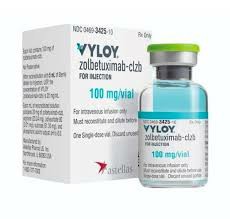
Zolbetuximab(zolbetuximab-clzb) is a targeted therapy drug used to treat advanced gastric cancer and gastroesophageal junction adenocarcinoma. It is a monoclonal antibody that targets a tight junction protein called claudin 18.2 (CLDN18.2). It has limited expression in normal tissues, but is abnormally high in about 30% to 50% of gastric cancer patients. The high expression of this protein has become a key target for the precise treatment of zotuximab, making this drug one of the most watched new biological agents in the field of gastric cancer in recent years.
In December 2023, the U.S. Food and Drug Administration (FDA) officially approved zotuximab combined with chemotherapy (capecitabine+oxaliplatin) as a first-line treatment for adult patients with CLDN18.2-positive, HER2-negative locally advanced or metastatic gastric cancer and gastroesophageal junction adenocarcinoma. This approval is based on its good safety profile and potential to extend progression-free survival in clinical trials. Although the specific data values u200bu200bare not detailed here, it has been adopted by international guidelines and has become one of the standard treatment strategies for some patients. The clear definition of this indication means that patients must confirm CLDN18.2 positivity through tissue testing before receiving the drug, and must also rule out HER2-positive status to avoid interference from cross-treatment pathways.
From a pathological point of view,claudin 18.2 is a member of the claudin family of tight junction proteins. It should only be expressed locally between gastric mucosal cells. However, during the malignant transformation of gastric cancer cells, its distribution range expands and is exposed on the cell surface, which provides an opportunity for antibody drugs to accurately attack. Zotuximab can induce antibody-dependent cytotoxicity (ADCC) and complement-dependent cytotoxicity (CDC) after binding to CLDN18.2, thereby achieving the elimination of cancer cells. This mechanism of action determines that its indications cannot be broadly applied to all types of gastric cancer, but only to subtypes that are positive for specific biomarkers.
It is worth noting that at present CLDN18.2 detection has not yet been fully standardized. Pathologists need to use immunohistochemistry (IHC) methods to evaluate the expression of this protein in tumor tissues. The proportion of positive tumor cells and staining intensity are usually used as judgment criteria. The FDA-approved indications emphasize that CLDN18.2 expression must reach moderate to high expression in at least 75% of tumor cells before patients can be determined to be suitable for the use of zotuximab. Therefore, the launch of this drug has played an important role in promoting the refined management of molecular classification treatment of gastric cancer.
Currently, in addition to gastric cancer and gastroesophageal junction adenocarcinoma, zotuximab is also being studied for indications in other tumor types, such as pancreatic cancer. CLDN18.2 may also be expressed in these cancer types. However, as far as the scope of the current approval is concerned, its indications do not cover a wider range of cancer types or recurrences, and are limited to first-line treatment for patients with advanced or inoperable patients after initial treatment. It should be reminded that this medication regimen is usually combined with chemotherapy drugs, so patients must evaluate their systemic status and immune tolerance before use to ensure the safety of the treatment and maximum benefit.
Judging from global market feedback, the approval of zotuximab has filled the gap in the treatment of CLDN18.2-positive gastric cancer and also provided new hope for HER2-negative patients. Especially when traditional regimens are unsatisfactory, precise treatment models based on molecular markers can significantly improve survival chances and treatment confidence. As more countries gradually approve the drug for marketing, its future medical insurance coverage, detection technology optimization, and combination with other treatment strategies are also worthy of attention.
Reference materials:https://www.astellas.com/en/news/29401
[ 免责声明 ] 本页面内容来自公开渠道(如FDA官网、Drugs官网、原研药厂官网等),仅供持有医疗专业资质的人员用于医学药学研究参考,不构成任何治疗建议或药品推荐。所涉药品可能未在中国大陆获批上市,不适用于中国境内销售和使用。如需治疗,请咨询正规医疗机构。本站不提供药品销售或代购服务。


