
.jpeg)
Afatinib belongs to the first generation of targeted therapy drugs
Afatinib (Afatinib) is a second-generation EGFR (epidermal growth factor receptor) tyrosine kinase inhibitor (EGFR-TKI span>), mainly used to treat patients with non-small cell lung cancer (NSCLC) carrying EGFR gene mutations. Compared with the first-generation targeted drugs such as gefitinib (Gefitinib) and erlotinib (Erlotinib), afatinib has different effects on EGFR family receptors. The reversible inhibitory effect not only acts on EGFR mutants, but also inhibits HER2 and HER4 receptors at the same time, so it also shows certain efficacy in some drug-resistant patients.
Afatinib is widely used to treat patients with advanced non-small cell lung cancer who have sensitive EGFR mutations (such as 19 exon deletion or 21 L858R point mutation). Studies have shown that afatinib can prolong the progression-free survival (PFS) of patients and also shows certain central nervous system activity in patients with brain metastases. Due to its irreversible inhibitory effect on multiple EGFR family members, it has a more durable anti-cancer effect than the first-generation drugs in clinical practice.
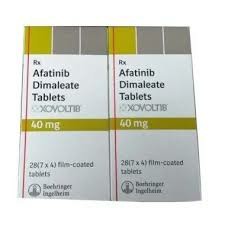
Although afatinib, as a second-generation drug, has certain advantages in efficacy, its side effects are relatively obvious. Common adverse reactions include diarrhea, rash, stomatitis, and paronychia. These side effects are particularly common in the early stages of use, and some patients may need to reduce the dose or take medication intermittently to improve tolerance. Therefore, the patient's response should be closely monitored during use and the treatment plan should be adjusted in a timely manner.
In the field of targeted therapy, afatinib, as the second generationEGFR-TKI, fills some gaps after the emergence of resistance to first-generation drugs, but for the most common T790MResistance mutations are not sensitive and require the use of third-generation EGFR inhibitors such as Osimertinib (Osimertinib). Therefore, the current common clinical practice is: after the first or second generation drug treatment fails, if the T790M mutation is found, the patient can switch to the third generation drug. Afatinib still occupies an important position in the entire EGFR treatment sequence.
References:https://www.giotrif.com/
[ 免责声明 ] 本页面内容来自公开渠道(如FDA官网、Drugs官网、原研药厂官网等),仅供持有医疗专业资质的人员用于医学药学研究参考,不构成任何治疗建议或药品推荐。所涉药品可能未在中国大陆获批上市,不适用于中国境内销售和使用。如需治疗,请咨询正规医疗机构。本站不提供药品销售或代购服务。


