
.jpeg)
Detailed explanation of the content and usage of Erdafitinib instructions
Erdafitinib is a targeted therapy specifically designed to treat adult patients with locally advanced or metastatic urothelial carcinoma (mUC) with specific FGFR gene alterations. It is the first selective oral tyrosine kinase inhibitor approved by the US FDA for FGFR3/2 gene abnormalities, and its launch marks another breakthrough in precision therapy in the field of bladder cancer.
1. Detailed explanation of indications
Erdafitinib is indicated for patients with metastatic or locally advanced urothelial carcinoma (mUC) who have susceptible FGFR3 or FGFR2 gene alterations. These patients have disease progression despite at least one systemic therapy (eg, platinum-based chemotherapy) or are intolerant to systemic therapy. FGFR gene mutation screening must be performed with an FDA-approved companion diagnostic. Untested patients cannot use this drug directly, and genetic testing before treatment is the prerequisite for decision-making. It is not recommended for patients with mUC who have not yet received PD-1 or PD-L1 immune checkpoint inhibitors, unless immunotherapy cannot be used due to other factors.
2. Mechanism of action
Erdafitinib is an oral small molecule tyrosine kinase inhibitor that mainly targets FGFR1, FGFR2, FGFR3 and FGFR4. In tumors with activating mutations, fusions, or amplifications of the FGFR gene, these abnormal signals can promote abnormal growth of cancer cells. Erdafitinib exerts anti-cancer effects by selectively inhibiting the kinase activity of these receptors and blocking the growth signals of tumor cells. It is particularly suitable for those with FGFR3 mutant bladder cancer, which accounts for about 15% to 20% of patients with advanced urothelial cancer.
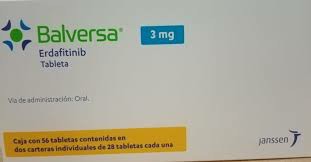
3. Recommended usage and dosage
1. The starting dose is 8 mg taken orally daily, taken at one time, preferably at the same time every day.
2. Dose adjustment: During the 14th to 21st days of treatment, if the patient tolerates it well and has no serious adverse reactions, it is recommended to increase the dose to 9 mg per day; hyperphosphatemia is a "drug activity sign" of drug efficacy, and a moderate increase often indicates that the drug is working. Therefore, the dose increase needs to be judged based on the overall phosphorus level and side effects.
3. How to take the drug: Oral tablets can be taken on an empty stomach or with food; if you miss a dose, you should not take it again on the same day, skip it directly, and take it as planned the next day; avoid concurrent use of acid-suppressing drugs, such as proton pump inhibitors orH2 antagonists, as they may affect the absorption of erdafitinib.
4. Adverse reactions and monitoring recommendations
1. Common adverse reactions:
Hyperphosphatemia (77%): a pharmacologically related effect, managed by adjusting diet or using phosphate binders;
Stomatitis, diarrhea, fatigue, dry skin, hand-foot syndrome;
Retinal pigment epithelial detachment (RPED): may cause blurred vision or dark shadows, requiring ophthalmological monitoring.
2. Laboratory and clinical monitoring:
Monitor serum phosphorus levels weekly until stable;
Regular eye exams, especially in the first few months after starting treatment;
Liver and kidney function, electrolytes, and blood routine were reviewed regularly.
3. Dose adjustment standards:
If hyperphosphatemia is severe (>7 mg/dL) or grade 3 toxicity occurs, the drug needs to be temporarily discontinued until recovery;
If tolerated after recovery, treatment may be resumed at a lower dose.
5. Drug interactions and usage precautions
Avoid coadministration with strong inducers of CYP2C9 and CYP3A4, such as rifampicin and carbamazepine, otherwise the plasma concentration of erdafitinib may be reduced.
AttentionThere is a risk of prolonging the QT interval. You should be particularly vigilant when using other drugs that affect the electrocardiogram.
Contraindicated in pregnancy and lactation: Erdafitinib can cause embryotoxicity. Women of childbearing age must take effective contraceptive measures during treatment and after discontinuation of the drugEffective contraceptive measures must be taken within 1 month.
Use with caution in the elderly: Although the overall tolerability of elderly patients (over 65 years old) is acceptable, side effects should still be monitored, especially changes in renal function and vision.
References:https://www.balversa.com/
[ 免责声明 ] 本页面内容来自公开渠道(如FDA官网、Drugs官网、原研药厂官网等),仅供持有医疗专业资质的人员用于医学药学研究参考,不构成任何治疗建议或药品推荐。所涉药品可能未在中国大陆获批上市,不适用于中国境内销售和使用。如需治疗,请咨询正规医疗机构。本站不提供药品销售或代购服务。


