
.jpeg)
How effective is capmatinib in treating lung cancer?
Capmatinib (Capmatinib) is a targeted therapy drug targeting MET gene mutations or amplifications. It is mainly used to treat patients with advanced or metastatic non-small cell lung cancer (NSCLC). As a MET inhibitor, capmatinib can specifically inhibit the activity of MET receptor tyrosine kinase, thereby blocking the abnormal proliferation and metastasis of tumor cells. In recent years, with the in-depth research on the molecular mechanisms of lung cancer, more and more evidence has shown that precision treatment targeting specific gene mutations can significantly improve the survival rate and quality of life of patients. Capmatinib is one of the important representatives in this field.
In terms of mechanism, capmatinib exerts anti-tumor effects by targeting mutations in the MET gene (especially exon 14 skipping mutations). METMutation or amplification often results in sustained activation of the MET pathway, promoting the growth, invasion and anti-apoptotic properties of cancer cells. Capmatinib can effectively inhibit this pathway, prevent tumor cell proliferation and induce apoptosis. For patients carrying MET exon 14 transitions, traditional chemotherapy or immunotherapy often respond poorly, and capmatinib provides a new treatment option for these patients.
In clinical studies, capmatinib has demonstrated good efficacy and safety. According to data from the GEOMETRY mono-1 study, MET exon patients treated with capmatinib 14Among patients with advanced non-small cell lung cancer who have not received treatment, the overall response rate (ORR) of patients who have not received treatment reaches 68%, and the disease control rate (DCR) is also very impressive. Even in patients who have progressed after receiving first-line or second-line treatment, capmatinib still shows an overall response rate of nearly 40%, which is much higher than that of traditional treatments. In addition, the median duration of response (DOR) of capmatinib is also relatively long, and can be maintained for more than one year in some patients, further consolidating its clinical application value.
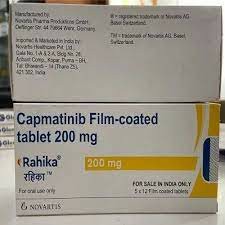
In addition to overall efficacy, capmatinib also performed well in improving patient symptoms. Many patients report that lung cancer-related symptoms such as cough, shortness of breath, and chest pain are significantly relieved and their quality of life is improved after taking the drug. In patients with brain metastases, capmatinib also shows certain central nervous system activity. Some brain metastases shrink or stabilize after treatment, which means that capmatinib is also a treatment option worth considering for patients with brain metastases.
However, it should be noted that the use of capmatinib is also accompanied by certain adverse reactions. Common side effects include peripheral edema, nausea, vomiting, fatigue, abnormal liver function, and decreased appetite. Most adverse reactions are mild to moderate, but close monitoring is still required during treatment, and dose adjustment or symptomatic supportive treatment is required if necessary. In addition, individual patients may develop serious adverse events such as interstitial lung disease. Therefore, when using capmatinib, doctors usually develop personalized treatment plans based on the patient's specific conditions to identify and deal with potential risks in a timely manner.
Currently, capmatinib has been approved in many countries and regions for the treatment of patients with advanced NSCLC carrying MET exon 14 transitions. In practical applications, genetic testing is usually required to determine whether a patient has MET-related mutations before treatment, so that precise treatment can be truly achieved. It is worth mentioning that because capmatinib targets patients with specific molecular characteristics, its use population is relatively limited, so it is not suitable for all types of lung cancer patients.
Overall, capmatinib brings new treatment hope to lung cancer patients carrying MET mutations or amplifications. It can not only improve the overall response rate and prolong survival time, but also improve the patient's quality of daily life to a certain extent. In the future, with the advancement of more clinical studies and the exploration of combinations with other targeted drugs or immunotherapy drugs, the application prospects of capmatinib are expected to be further expanded and bring good news to more patients with lung cancer.
Reference materials:https://www.novartis.com/our-products/pipeline/capmatinib
[ 免责声明 ] 本页面内容来自公开渠道(如FDA官网、Drugs官网、原研药厂官网等),仅供持有医疗专业资质的人员用于医学药学研究参考,不构成任何治疗建议或药品推荐。所涉药品可能未在中国大陆获批上市,不适用于中国境内销售和使用。如需治疗,请咨询正规医疗机构。本站不提供药品销售或代购服务。


