
.jpeg)
Analysis of the effects and precautions for use of atrasentan (Vanrafia) in the treatment of IgA nephropathy
On 202543, Novartis announced that the U.S. Food and Drug Administration (FDA) has accelerated approval of Vanrafia (atrasentan) ), used to treat those with primary immunoglobulinA nephropathy (IgA nephropathy) who are at risk for rapid progression Adult patients at risk, especially those whose urine protein to creatinine ratio (UPCR) is greater than 1.5g/g. Vanrafia is the first ETA receptor antagonist approved to reduce IgA nephrotic proteinuria. Its innovative treatment mechanism may bring new hope to such patients.
VanrafiaIndications and usage
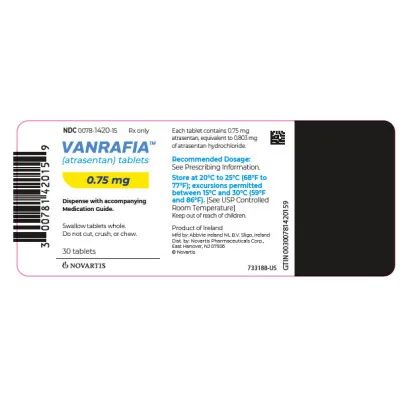
Vanrafiais indicated for reducing IgA proteinuria in patients with kidney disease, especially those facing rapid disease progression. This drug works by taking a dose of 0.75 mg once daily. Patients can take this medicine with or without food, but they must swallow the tablet whole and avoid cutting or chewing the tablet. Before treatment, doctors should confirm that the patient is not pregnant to ensure the safety of medication. If the patient misses a dose, do not compensate by doubling the dose and should take the regular dose at the next scheduled time.
VanrafiaContraindications and Potential Risks
Although Vanrafia has a significant effect on the treatment of IgA kidney disease, it is not suitable for all people. This drug is contraindicated in pregnant women because animal studies have shown that atrasentan may harm the fetus. In addition, patients who have allergic reactions to drug ingredients, such as those who are allergic to excipients such as crospovidone, should also avoid using Vanrafia. Common adverse reactions include peripheral edema and anemia. Patients need to monitor these symptoms regularly during medication to ensure timely treatment.
VanrafiaDrug interactions and use in special populations
In terms of drug interactions,Vanrafiamay have adverse reactions with certain medications. For example, the effect of atrasentan may be reduced when used with strong or moderate CYP3A inducers, compromising therapeutic efficacy. Therefore, it is necessary to avoid concurrent use with such drugs. At the same time, if the patient is taking OATP1B1/1B3 inhibitors, they need to avoid taking them together with Vanrafia to avoid increasing the risk of adverse reactions. In terms of special populations, although elderly patients did not show significant safety differences in the study, patients with liver damage require special attention. The dose of Vanrafia does not need to be adjusted in patients with mild or moderate hepatic impairment, but the drug should not be used in patients with severe hepatic impairment.
The therapeutic effect and safety of Vanrafia depend on the individual circumstances of the patient. Therefore, while using this drug, patients need to maintain close communication with medical staff and promptly report any symptoms of discomfort. Especially for pregnant women, lactating women and patients with liver damage, they must be used with caution and make reasonable adjustments in compliance with medical advice.
References:
[1]https://www.novartis.com/us-en/sites/novartis_us/files/vanrafia.pdf
[2]https://www.novartis.com/news/media-releases/novartis-receives-fda-accelerated-approval-vanrafia-atrasentan-first-and-only-selective-endothelin-receptor-antagonist-proteinuria-reduction-primary-iga-nephropathy-igan
[ 免责声明 ] 本页面内容来自公开渠道(如FDA官网、Drugs官网、原研药厂官网等),仅供持有医疗专业资质的人员用于医学药学研究参考,不构成任何治疗建议或药品推荐。所涉药品可能未在中国大陆获批上市,不适用于中国境内销售和使用。如需治疗,请咨询正规医疗机构。本站不提供药品销售或代购服务。


