
.jpeg)
CCTG BR.31 data show adjuvant durvalumab does not alter recurrence frequency or pattern in resected non-small cell lung cancer
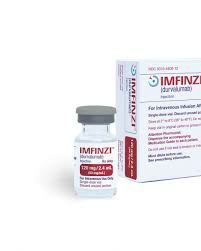
According to Phase 3 CCTG Analytical data from the BR.31 trial (NCT02273375), adjuvant durvalumab/durvalumab compared with placebo
Study results released in 2025 showed that among all patients without EGFR or ALK alterations, the relapse rate was 36.4% in patients treated with durvalumab (n=815) and 37.1% in patients treated with placebo (n=404). Among patients with PD-L1 expression of at least 25%, relapse rates were 33.2% with durvalumab (n=316) and 32.3% with placebo (n=161). Among patients with PD-L1 expression of at least 1%, relapse rates were 35.8% with durvalumab (n=469) and 33.7% with placebo (n=240).
In addition, secondary cancer was reported in 5.3% of the total population treated with durvalumab, compared with 8.7% in the placebo group. In the patient population with PD-L1 expression of at least 25%, these rates were 6% and 8.7%, respectively. In the subgroup of patients with PD-L1 expression of at least 1%, the incidence of secondary cancer was 5.8% with durvalumab and 8.8% with placebo. In patients with EGFR-negative and ALK-negative NSCLC who underwent complete resection, adjuvant durvalumab did not reduce the frequency of recurrence or change the pattern of recurrence regardless of PD-L1 status.
CCTG submitted in2024 BR.31 Previously reported data showed that at a median follow-up of 60.0 months, patients with resected NSCLC without EGFR or ALK changes and with PD-L1 expression of at least 25% treated in the durvalumab arm (n=316) had a median disease-free survival (DFS) was 69.9 months (95% CI, 57.6-not reached [NR]), compared with 60.2 months (95% CI, 47.7-NR) in the placebo group (n=161; HR, 0.935; 95% CI, 0.706-1.247; P=60.2 months (95% CI, 47.7-NR).
atIn the patient population with PD-L1 expression of at least 1%, median DFS was 59.9 months (95% CI, 48.4-77.9) with durvalumab (n=469) versus placebo. It was 60.3 months (95%CI, 43.8-80.9) (n=240; HR, 0.989; 95%CI, 0.788-1.248; P=0.926). Across all populations, median DFS was 60.0 months (95% CI, 49.6-74.9) with durvalumab (n = 815) and 53.9 months (95% CI, 36.7-67.3) with placebo (n = 404; HR, 0.893; 95% CI, 0.752-1.065; P = 0.207).
Of all durvalumab-evaluable patients who experienced disease recurrence (n=297), 57% had local recurrence only, 57% had distant recurrence only, and 19% had both local and distant recurrence. In the placebo group (n=150), these rates were 18%, 62%, and 20%, respectively. Among this group of patients, 16% of patients in the durvalumab group and 19% of patients in the placebo group had only distant recurrence.
In the patient populationwith PD-L1 expression of at least 25%, the improvement in local recurrence in the imrvalumab group (n=105) and the placebo group (n=52) Patterns of relapse were also similar (durvalumab, 24%; placebo, 29%), distant relapse only (61%; 52%), local and distant relapse (15%; 19%), and brain relapse only (20%; 17%). Sites of distant recurrence in this population included lung (imrvalumab, n=34; placebo, n=16), brain (n=25; n=12), distant lymph nodes (n=12; n=10), pleura (n=15; n=9), bone (n=7; n=4), adrenal gland (n=6; n=2), and liver (n=4; n=3).
Additionally, a descriptive analysis excluding censored patients showed that among all participants in the durvalumab group, there were local recurrences only at a median of 14 months after randomization, distant recurrences only at a median distant recurrences at 12 months, local plus distant recurrences at a median 14 months, and brain recurrences only at a median 10 months. In the placebo group, these times were 8 months, 8 months, 11 months and 11 months.
In the population of patients treated with durvalumab who had PD-L1 expression of at least 25%, the median time to local recurrence only was 13 months, to distant recurrence only was 14 months, to local plus distant recurrence was 13 months, and to brain only recurrence was 11 months. These values u200bu200bfor the placebo group were 8 months, 8 months, 14 months and 16 months respectively.
Patients with PD-L1 expression of at least 1% treated with durvalumab had a median time of 14 months for local recurrence only, 14 months for distant recurrence only, 14 months for local plus distant recurrence, and 15 months for brain only recurrence. In the placebo group, these values u200bu200bwere 9 months, 8 months, 13 months and 16 months.
In the overall population, among patients with distant recurrence with or without local recurrence, 88% of patients in the durvalumab group and 94% of patients in the placebo group received any subsequent therapy. In the durvalumab group, subsequent treatments included chemotherapy (53%), immunotherapy (21%), and targeted therapy (24%). These rates were 50%, 31% and 31% in the placebo group, respectively.
In the patient population with PD-L1 expression of at least 25%, 91% of patients with distant recurrence in the durvalumab group received subsequent therapy compared with 97% of patients in the placebo group. Subsequent treatments in the durvalumab group included chemotherapy (50%), immunotherapy (26%), and targeted therapy (19%). Those rates in the placebo group were 54%, 46% and 24%, respectively.
For patients with distant recurrences whose PD-L1 expression was at least 1%, 90% in the durvalumab group and 94% in the placebo group received subsequent treatment, including chemotherapy (durvalumab, 52%; placebo, 52%), immunotherapy (24%; 40%) and targeted therapy (21%; 22%).
Among all participants, subsequent treatment included surgery (9.7%) and radiation therapy (65.3%) in the durvalumab group for patients with only local recurrence (n=72); these rates were 7.4% and 74.1%, respectively, in the placebo group (n=27). For patients with brain-only recurrence in the durvalumab group (n=48), other treatments included surgery (41.7%) and radiation therapy (85.4%); these rates in the placebo group were 41.4% and 75.9%, respectively.
In the subgroup of patients with PD-L1 expression of at least 25%, only patients with local recurrence (n=25) in the durvalumab group received subsequent surgery (12%) or radiation therapy (76%); these rates were 13.3% and 73.3%, respectively, in the placebo group (n=15). Among patients with brain-only recurrence, 47.6% and 90.5% in the durvalumab group (n=21) received subsequent surgery and radiation therapy, respectively. These rates were 77.8% in the placebo group (n=9).
For patients with PD-L1 expression of at least 1%, subsequent treatment for local recurrence alone included surgery (8.9%) and radiation therapy (66.7%) in the durvalumab group (n=45); these rates were 11.1% and 72.2%, respectively, in the placebo group (n=18). For patients with brain-only recurrence, subsequent treatment included surgery (43.3%) and radiation therapy (83.3%) in the durvalumab group (n=30); in the placebo group (n=12), these rates were both 66.7%.
Reference materials:https://www.onclive.com/view/cctg-br-31-data-show-adjuvant-durvalumab-does-not-alter-relapse-frequency-or-patterns-in-resected-nsclc
[ 免责声明 ] 本页面内容来自公开渠道(如FDA官网、Drugs官网、原研药厂官网等),仅供持有医疗专业资质的人员用于医学药学研究参考,不构成任何治疗建议或药品推荐。所涉药品可能未在中国大陆获批上市,不适用于中国境内销售和使用。如需治疗,请咨询正规医疗机构。本站不提供药品销售或代购服务。


