
.jpeg)
Can Opicapone cure Parkinson's disease? Discussion of therapeutic effects and limitations
Opicapone is a drug used to treat Parkinson's disease and is a COMT inhibitor (catechol-O- methyltransferase inhibitor). It relieves symptoms of Parkinson's disease by prolonging the action of levodopa (L-DOPA). Although Opicapone has an obvious therapeutic effect on patients and can improve symptoms and delay the progression of the disease, it cannot cure Parkinson's disease and still has certain treatment limitations. The therapeutic effects, mechanisms of action and limitations of Opicapone will be discussed in detail below.
1. The therapeutic effect of Opicapone
Opicapone inhibits the action of COMT enzyme, delays L-DOPA metabolism and increases L-DOPA concentration in the brain. This mechanism can enhance the effectiveness of L-DOPA, thereby reducing the "motor fluctuations" phenomenon in patients with Parkinson's disease, especially the "on-off" phenomenon (i.e. fluctuations in drug effect), which is a significant improvement for many patients. Compared with other COMT inhibitors, opicapone is better tolerated and has fewer side effects, making it an effective auxiliary drug for Parkinson's disease.
Clinical studies have shown that Opicapone can significantly reduce the "OFF" time (i.e., the time for symptoms to worsen) and prolong the "ON" time (i.e., the time for symptoms to be controlled) when patients are treated with L-DOPA. Additionally, patients' exercise capacity, activity levels, and quality of life improved. For those patients whose L-DOPA treatment effects are gradually waning or who experience an “on-off” phenomenon, Opicapone becomes a valuable treatment option.
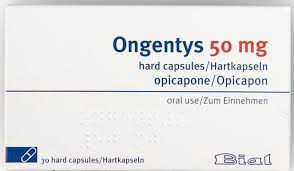
2. Opicapone’s mechanism of action
The mechanism of action of Opicapone is mainly by inhibiting COMT enzyme and prolonging the action time of L-DOPA in the body. COMT is an enzyme involved in the metabolism of L-DOPA. It converts L-DOPAConverts to 3-methyldopa, reducing the bioavailability of L-DOPA. By inhibiting COMT, Opicapone reduces L-DOPA metabolism, allowing more L-DOPA to enter the brain, thereby enhancing its effects. This mechanism of action of Opicapone makes it play a unique role in the treatment of Parkinson's disease, especially when used in conjunction with L-DOPA, it can better relieve symptoms and prolong the efficacy of the drug.
3. Limitations of Opicapone
Although Opicapone is effective in treating Parkinson's disease, it does not cure Parkinson's disease. Parkinson's disease is a progressive neurodegenerative disease whose underlying cause is the progressive loss of dopaminergic neurons in the brain. The role of Opicapone is only to improve the symptoms caused by dopamine deficiency, but it cannot change the underlying cause of the disease. Therefore, while Opicapone can help improve patients' motor symptoms and quality of life, it does not completely eliminate symptoms or prevent further progression of the disease.
Also, the effectiveness of opicapone may diminish over time. As Parkinson's disease progresses, the loss of dopaminergic neurons in the patient's brain increases, and the effect of L-DOPA may gradually weaken. Even when using Opicapone, patients may still experience an increase in "OFF" time or recurrence of symptoms. For these patients, although Opicapone can prolong the effects of the drug, it is not a permanent solution to the problem.
4. Comprehensive treatment and patient management
Although Opicapone cannot cure Parkinson's disease, it is still an integral part of Parkinson's disease treatment. In order to improve the therapeutic effect, patients with Parkinson's disease often require a combination of multiple drugs. In addition to opicapone, patients may also need to take drugs such as levodopa, D2 receptor agonists, MAO-B inhibitors, etc. to better control symptoms. In addition, non-drug treatments such as physical therapy, occupational therapy and speech therapy also have a positive impact on patients' functional recovery and quality of life.
In short, as an auxiliary drug for Parkinson's disease, Opicapone can significantly improve patients' motor symptoms, prolong the action time of the drug, and reduce the "on-off" phenomenon. However, it does not cure Parkinson's disease and its effectiveness may diminish as the disease progresses. Therefore, patients need to combine multiple treatments for comprehensive management under the guidance of a doctor in order to obtain the best treatment effect.
Reference materials:https://www.ongentys.com/
[ 免责声明 ] 本页面内容来自公开渠道(如FDA官网、Drugs官网、原研药厂官网等),仅供持有医疗专业资质的人员用于医学药学研究参考,不构成任何治疗建议或药品推荐。所涉药品可能未在中国大陆获批上市,不适用于中国境内销售和使用。如需治疗,请咨询正规医疗机构。本站不提供药品销售或代购服务。


