
.jpeg)
Which generation of targeted drug is Tepotinib? Detailed explanation of treatment features
Tepotinib is a targeted therapy drug specifically targeting MET gene abnormalities. It is mainly used to treat MET exon 14 skipping mutations (METex14 Skipping) patients with advanced non-small cell lung cancer (NSCLC). From the perspective of the development history of targeted therapy drugs, tepotinib is usually classified as a new generation of highly selective MET inhibitors. Although targeted drugs are traditionally divided into first, second and third generation, Tepotinib is usually regarded as a "new generation" or "highly specific" MET targeted drug due to its unique target and high selectivity, rather than being classified according to conventional generations.
Different from some previous multi-target MET inhibitors, tepotinib specifically targets MET pathway abnormalities and has higher targeting and better tolerability. Some drugs used in the early treatment of abnormalities in the MET pathway, such as crizotinib (Crizotinib), although they can also inhibit MET, have certain limitations in efficacy and safety due to their wide range of action and insufficient specificity. Tepotinib has significantly improved selectivity and inhibitory activity, and can more accurately target patients with MET mutations. Therefore, it is considered to be a more advanced option in the field of treatment for METex14 mutations.
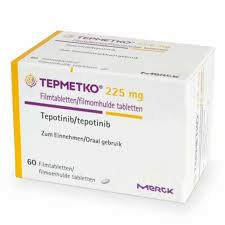
In terms of efficacy, tepotinib has shown good therapeutic effects. According to relevant clinical studies (such as the VISION study), in patients with METex14 mutated lung cancer treated with tepotinib, the objective response rate (ORR) reached By 44%-51%, the median progression-free survival (PFS) can reach about 8-11 months, and it shows stable efficacy in both treatment-naive and treatment-experienced patients. These data show that tepotinib can not only effectively shrink tumors, but also delay disease progression, and the side effects are generally controllable, bringing new treatment hope to patients.
To sum up, tepotinib is a new generation of highly selective targeted drug targeting MET gene abnormalities. Although it is not asEGFR-TKI is strictly divided into the first, second and third generations, but among the MET pathway targeted therapeutic drugs, tepotinib represents a newer development direction. For non-small cell lung cancer patients diagnosed with METex14 skipping mutations through genetic testing, tepotinib provides a new treatment option that is precise, effective and well-tolerated.
Reference materials:https://www.tepotinib.com/
[ 免责声明 ] 本页面内容来自公开渠道(如FDA官网、Drugs官网、原研药厂官网等),仅供持有医疗专业资质的人员用于医学药学研究参考,不构成任何治疗建议或药品推荐。所涉药品可能未在中国大陆获批上市,不适用于中国境内销售和使用。如需治疗,请咨询正规医疗机构。本站不提供药品销售或代购服务。


