
.jpeg)
Comparison of the IWG 2023 and 2006 MDS criteria for the evaluation of ivonib in the treatment of mIDH1 disease
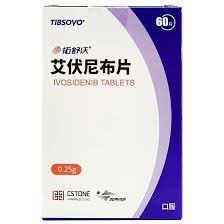
In a recent study, researchers evaluatedmyelodysplastic syndromes (MDS) using the International Working Group (IWG) 2023Myelodysplastic Syndrome (MDS) criteria. pan>Ivosidenib/Ivosidenib (Ivosidenib)Clinical performance in the treatment of mutant isocitrate dehydrogenase1 (mIDH1) MDS. Based on these criteria, they found that ivosidenib produced a high overall response rate (ORR) in this setting.
The researchers also used the study to compare assessments using the 2023 MDS standards and the 2006 standards. The International Working Group 2023 criteria accurately capture the clinical benefit of ivosidenib in relapsed or refractory MDS by eliminating the [International Working Group 2006 myeloid complete response (CR) category] and assessing response in a high-risk population with a blast rate [less than] 5%.
The study conducted a cohort study of 19 MDS patients who had received standard of care treatment. The median age of patients was 73 years old, and 78.9% of patients had received hypomethylation therapy. Eighteen patients had evaluable efficacy data. The cohort received 500 mg of ivonib orally daily over a 28-day cycle.
When comparingIWG 2023 assessments to the 2006 standards, the researchers used composite CR categories for their IWG 2023 assessments. This composite CR combines CR with CR equivalent, CR with limited count recovery, and CR with partial hematologic recovery. According to IWG 2006 criteria, the CR plus partial response (PR) rate in this cohort was 38.9%, with all responders achieving CR. According to the IWG 2023 standard, the composite CR+PR rate is 66.7%. The ORR of this cohort was 83.3% according to IWG 2006 criteria and 72.2% according to IWG 2023 criteria
Eight patients classified as bone marrow CR according to IWG 2006 criteria were reclassified according to IWG 2023 criteria as follows: 1 CR, 4 CR with limited count recovery, 1 hematological improvement, and 2 no response. The median time to composite CR was 1.58 months, and the median duration was not reached.
Required red blood cell transfusion at baselineFive of the seven patients achieved transfusion independence, and three of the four patients who required platelet transfusions achieved transfusion independence. The median time for patients with composite CR to achieve independent status was 2.64 months. During the study period, 10 of 12 patients with composite CR achieved or maintained transfusion independence. The median duration of transfusion independence was not reached.
Although the comparison of survival outcomes between the IWG 2006 and IWG 2023 criteria was limited by small sample sizes, the study still observed a trend in outcomes such as response-dependent event-free survival (EFS) and overall survival (OS). This result reminds us that as the standards are updated, the design and result evaluation of clinical research also need to be followed up urgently to ensure the scientific validity and applicability of the research conclusions. In short, this study provides an important basis for the application of ivonib in patients with mIDH1 MDS, and also opens up new directions for future research.
References:https://www.docwirenews.com/post/iwg-2023-2006-mds-criteria-assessments-of-ivosidenib-for-midh1-disease-compared
[ 免责声明 ] 本页面内容来自公开渠道(如FDA官网、Drugs官网、原研药厂官网等),仅供持有医疗专业资质的人员用于医学药学研究参考,不构成任何治疗建议或药品推荐。所涉药品可能未在中国大陆获批上市,不适用于中国境内销售和使用。如需治疗,请咨询正规医疗机构。本站不提供药品销售或代购服务。


