
.jpeg)
Which generation of targeted therapy drugs does Tepotinib belong to?
Tepotinib is a targeted drug specifically designed to treat non-small cell lung cancer (NSCLC) carrying MET gene skipping mutations (MET exon 14 skipping mutation). Strictly speaking, tepotinib does not belong to the first, second or third generation systems of the conventional classification of EGFR targeted drugs, because its target is MET (mesenchymal epithelial transforming factor receptor), not EGFR. However, if divided according to the development stage and precision of targeted therapy, tepotinib can be regarded as a new generation of precision targeted therapy.
The mechanism of Tepotinib determines its unique position among targeted drugs. It is an oral, small molecule, highly selective METtyrosine kinase inhibitor, specifically used to inhibit the proliferation and metastasis of tumor cells caused by MET gene abnormalities. Traditional EGFR targeted drugs are mostly targeted at EGFR mutation patients, while tepotinib is for those MET exon 14Targeted for patients with positive skip mutations, this type of mutation accounts for about 3%-4% of patients with lung adenocarcinoma, but the proportion is higher in the elderly and NSCLC with sarcomatoid pathological features.
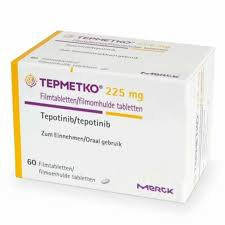
From the perspective of time to market and technology update, tepotinib represents a "new stage" of targeted therapy. It was first approved in Japan in 2020, becoming the world's first approved targeted drug for the treatment of MET exon 14 mutations. Later, it also received FDA's "breakthrough therapy" designation and accelerated approval in the United States. This progress marks the entry of MET pathway-targeted therapy into clinical application and fills the gap of the long-term lack of effective treatment options for these patients.
Tepotinib is often compared with another drug with the same target—Capmatinib (Capmatinib), both of which are precisely positionedMET exon 14Mutation-targeting drugs. When choosing a drug, doctors usually conduct a comprehensive evaluation based on the patient's mutation type, physical condition, and previous drug reactions. It is worth noting that tepotinib has been included in my country's medical insurance, which provides patients with a more accessible treatment option, and its efficacy and safety have been continuously verified in real-world studies.
Reference materials:https://www.tepotinib.com/
[ 免责声明 ] 本页面内容来自公开渠道(如FDA官网、Drugs官网、原研药厂官网等),仅供持有医疗专业资质的人员用于医学药学研究参考,不构成任何治疗建议或药品推荐。所涉药品可能未在中国大陆获批上市,不适用于中国境内销售和使用。如需治疗,请咨询正规医疗机构。本站不提供药品销售或代购服务。


