
.jpeg)
Detailed explanation of the drug instructions for tofacitinib tablets
Tofacitinib is an oral small molecule Janus kinase (JAK) inhibitor that is widely used in the treatment of a variety of autoimmune diseases, especially rheumatoid arthritis (RA), psoriatic arthritis (PsA), ankylosing spondylitis (AS), and ulcerative colitis (UC). The drug inhibits the JAK signaling pathway, blocks the signaling of pro-inflammatory cytokines, reduces inflammatory responses and abnormal activation of immune cells, thereby improving disease activity and symptoms. Its drug instructions describe in detail the indications, usage and dosage, contraindications and safety precautions of tofacitinib.
Tofacitinib is primarily indicated for patients with moderately to severely active autoimmune diseases who have an inadequate response to or are intolerant to one or more tumor necrosis factor (TNF) blockers. For adults with rheumatoid arthritis, the recommended dose is tofacitinib as a 5 mg tablet taken orally twice daily or as an extended-release 11 mg tablet taken once daily. Dosage regimens are similar for patients with psoriatic arthritis and ankylosing spondylitis. For patients with ulcerative colitis, initial treatment is at a higher dose of 10 mg oral tablets twice daily for at least 8 weeks, followed by transition to a maintenance dose of 5 mg twice daily for up to 16 weeks based on response to treatment. Dosing of the extended-release tablets corresponds to an initial dose of 22 mg once daily, transitioning to a maintenance dose of 11 mg once daily. For children with polyarticular juvenile idiopathic arthritis, the dose is adjusted based on body weight. For those weighing 10-20 kg, 3.2 mg oral solution twice a day, for those 20-40 kg, 4 mg twice a day, and for those 40 kg and above, 5 mg twice a day. The doses of oral solutions and tablets are not equivalent and must be used strictly according to body weight.
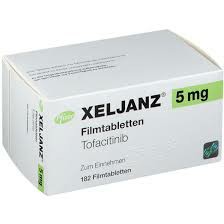
The instructions clearly state that tofacitinib is not recommended to be used in combination with other biological agents or powerful immunosuppressants (such as azathioprine, cyclosporine) to reduce the risk of serious infections and immune-related side effects. In addition, patients should closely monitor blood routine, liver and kidney function, and infection indicators during the medication period. If they develop fever, persistent cough, or other infection symptoms, they should seek medical attention promptly. Tofacitinib may cause adverse reactions such as herpes zoster, pneumonia, and dyslipidemia. Clinicians need to adjust the dose or discontinue the drug according to the patient's specific conditions.
In terms of dose conversion, tofacitinib extended-release tablets cannot be directly substituted with ordinary tablets. For patients taking the twice-daily 5 mg regular tablet, it is recommended that the once-daily 11 mg extended-release tablet be started the day after the last dose; patients taking the twice-daily 10 mg regular tablet may be switched to the once-daily 22 mg extended-release tablet. This dose transition is designed to optimize patient medication compliance and quality of life while maintaining stable efficacy.
In summary, tofacitinib serves as a targetThe broad-spectrum immunomodulatory functions of small molecule drugs of the JAK pathway make them an important treatment option for a variety of immune-mediated diseases. Drug instructions provide detailed indications and dosage guidance to help clinicians develop personalized treatment plans based on individual patient conditions. In clinical application, rational drug use, regular monitoring and timely management of side effects are the keys to ensuring patient safety and efficacy. As research on JAK inhibitors continues to deepen, the application potential of tofacitinib in more immune diseases will continue to be explored.
Reference materials:https://www.xeljanz.com/
[ 免责声明 ] 本页面内容来自公开渠道(如FDA官网、Drugs官网、原研药厂官网等),仅供持有医疗专业资质的人员用于医学药学研究参考,不构成任何治疗建议或药品推荐。所涉药品可能未在中国大陆获批上市,不适用于中国境内销售和使用。如需治疗,请咨询正规医疗机构。本站不提供药品销售或代购服务。


