
.jpeg)
Instructions for the treatment of nephropathy with fenelidone: dosage, administration and indications
Finerenone (Finerenone) is a new type of non-steroidal selective mineralocorticoid receptor antagonist (MRA), mainly used to treat adult patients with type 2 diabetes and chronic kidney disease (CKD). Its research and development goals are to delay the progression of kidney disease and reduce the risk of cardiovascular events. In 2021, the U.S. FDA approved the marketing of fenelidone, becoming the first non-steroidal MRA drug for patients with diabetic nephropathy. The following are instructions for the use of fenelidone in the treatment of kidney disease, including dosage, methods and indications.
1. Indications and treatment mechanisms
Finelidone is suitable for adult patients with type 2 diabetes and chronic kidney disease, especially if the glomerular filtration rate (eGFR) ≥
Compared with traditional steroidsMRA (such as spironolactone and eplerenone), fenelinone has greater selectivity, lower risk of hormone-like side effects, and has a relatively small impact on elevated blood potassium, so it is safer to use in patients with renal disease and cardiovascular disease.
2. Recommended dosage and usage
Fenelidone is taken orally in the form of tablets. It is generally recommended to swallow the tablet whole with water once a day. It can be taken with food or on an empty stomach. The initial recommended dose is based on the patient's eGFR level:
For patients with eGFR ≥60 ml/min/1.73m², the recommended starting dose is 20mgonce daily;
For patients whose eGFR is between 25~59 ml/min/1.73m², the recommended starting dose is 10 mgonce daily;
WheneGFR is stable and there is no hyperkalemia, the 10mg dose can be adjusted up to 20mg once a day to achieve the best therapeutic effect;
If the patient's serum potassium level rises above 5.5 mmol/L, the medication should be temporarily stopped. After the serum potassium returns to normal, the medication can be resumed and the dosage adjusted under the guidance of a doctor.
During the course of taking the drug, it is recommended to regularly monitor the patient's renal function and serum potassium level, especially in the first month after starting the drug and after each dose adjustment, to prevent complications such as hyperkalemia.
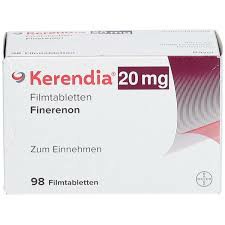
3. Precautions and taboos
Although fenelinone is highly selective and well tolerated, the following should be noted:
Contraindicated in patients whose serum potassium level is persistently higher than 5.0 mmol/L;
Contraindicated for useeGFR <25 ml/min/1.73m² or patients with end-stage renal disease who require dialysis;
It is contraindicated for those who are allergic to the components of fenelidone;
It is not recommended to combine with otherMRA drugs (such as spironolactone, eplerenone);
Combined use with certainCYP3A4 strong inhibitors (such as ketoconazole, clarithromycin) may increase drug concentration, and simultaneous use should be avoided.
In addition, elderly patients and patients with abnormal liver function or heart failure should use it with caution, and changes in electrolytes and renal function should be monitored regularly.
4. Clinical research support and efficacy observation
The efficacy of fenelidone mainly comes from two international multi-center randomized controlled trials:FIDELIO-DKD and FIGARO-DKD. Both studies showed that fenelinone can significantly delay the decline in renal function and reduce the incidence of adverse cardiovascular events in patients with type 2 diabetic nephropathy. FIDELIO-DKDIn the study, the risk of renal disease progression in the fenelidone group was reduced by 18% compared with the placebo group; while FIGARO-DKDResearch shows that it has significant advantages in reducing the risk of cardiovascular death, non-fatal myocardial infarction and hospitalization.
Overall, fenelidone is an important innovation in the field of kidney disease treatment in recent years, especially for patients with diabetic kidney disease, providing a new option for delaying the progression of the disease. Although it has not yet been widely marketed in my country, as the global promotion process advances, the future domestic application prospects are worth looking forward to. When prescribing this drug, doctors should consider the patient's individual conditions, reasonably select the dosage and conduct regular follow-up visits to ensure maximum efficacy and safety.
Reference materials:https://www.kerendia.com/
[ 免责声明 ] 本页面内容来自公开渠道(如FDA官网、Drugs官网、原研药厂官网等),仅供持有医疗专业资质的人员用于医学药学研究参考,不构成任何治疗建议或药品推荐。所涉药品可能未在中国大陆获批上市,不适用于中国境内销售和使用。如需治疗,请咨询正规医疗机构。本站不提供药品销售或代购服务。


