
.jpeg)
What kind of medicine is trientine? What are its basic ingredients and uses?
Trientine (Trientine) is a drug used to treat copper accumulation diseases, mainly Wilson's disease. Wilson's disease is a hereditary disease caused by gene mutations, which leads to disorders of copper metabolism in the body. Copper accumulates in important organs such as the liver, brain, and kidneys, causing organ damage. Trientine works by binding to excess copper in the body, helping to eliminate the excess copper, thereby alleviating the condition. It is a copper chelator that can eliminate copper ions from the body by forming a stable complex with them.
The main component of trientine is chlorothixol (Trientine), which can selectively bind to copper ions, thereby reducing copper absorption and promoting copper excretion. Compared with other copper chelators such as mecllor (penicillamine), trientine has relatively few side effects, making it a good alternative for some patients who are intolerant to mecllor. Trientine is commonly used in the long-term treatment of Wilson's disease to help patients control copper accumulation, prevent organ damage, and improve patients' quality of life.
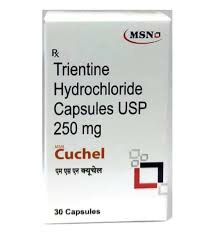
The therapeutic effect of trientine is mainly reflected in reducing and preventing various complications caused by copper poisoning, such as liver damage, neurological problems and kidney function damage. People with Wilson's disease usually require lifelong treatment, with medication doses adjusted by regularly monitoring copper levels to maintain normal levels of copper in the body. The use of trientine can effectively prevent further progression of the disease, especially in the case of early diagnosis and timely treatment, it can significantly improve the prognosis of patients.
However, although trientine plays an important role in the treatment of Wilson's disease, it still needs to be used under the guidance of a professional doctor. The dosage and frequency of use of the drug need to be adjusted according to the patient's specific conditions. Excessive use may cause adverse reactions, such as anemia, liver damage, etc. Therefore, patients should undergo regular monitoring of liver function, blood tests, etc. when using trientine to ensure the safety and effectiveness of treatment.
Reference materials:https://www.cufence.com/
[ 免责声明 ] 本页面内容来自公开渠道(如FDA官网、Drugs官网、原研药厂官网等),仅供持有医疗专业资质的人员用于医学药学研究参考,不构成任何治疗建议或药品推荐。所涉药品可能未在中国大陆获批上市,不适用于中国境内销售和使用。如需治疗,请咨询正规医疗机构。本站不提供药品销售或代购服务。


