
.jpeg)
Can I still take lorlatinib after it expires? Alternative treatment options after drug resistance
Lorlatinib (Lolatinib) is a targeted therapy that targets ALK (anaplastic lymphoma kinase) mutations and is commonly used to treat patients with non-small cell lung cancer (NSCLC) who are resistant to first- and second-generation ALK inhibitors. However, in some patients, the effectiveness of lorlatinib (lorlatinib) may gradually diminish over time, leading to drug failure or resistance. So, after lorlatinib wears off, can patients continue taking it, or are there alternative treatment options?
Once lorlatinib (lorlatinib) wears off, continued use of the drug often has very limited effectiveness. Most patients achieve good clinical responses initially to lorlatinib, but over time, some patients develop resistance to the drug. Drug resistance may be due to tumor cells evading the inhibitory effects of drugs through genetic mutations or other adaptive mechanisms. Once resistance develops, the efficacy of continuing to take lorlatinib will be significantly reduced, so it is generally not recommended to continue using lorlatinib in cases of resistance. At this time, patients should discuss other treatment options with their doctor.
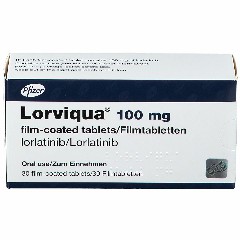
After lorlatinib fails, patients often turn to otherALK inhibitors for treatment. For example, the third-generation ALK inhibitors alectinib or ceritinib may be considered as treatment alternatives. Ametinib is currently one of the standard options for the treatment of ALK positive lung cancer. Especially for those patients who are resistant to lorlatinib (lorlatinib) , ametinib can effectively prolong progression-free survival. In addition, Brigatinib (Brigatinib) and Crizotinib (Crizotinib) are also recommended as second-line or third-line treatment options. The specific choice needs to be determined based on the patient's specific situation and resistance mechanism.
In some patients with drug-resistant ALK positive non-small cell lung cancer, immune checkpoint inhibitors (such as PD-1/PD-L1 inhibitors) may become an effective treatment option. Studies have shown that some patients with non-small cell lung cancer, even if they are ALK mutation-positive, can still respond to immune checkpoint inhibitors. Common immune checkpoint inhibitors include pembrolizumab (Pembrolizumab) and nivolumab (Nivolumab). These drugs work by activating the immune system's Tcells, which help the body recognize and attack tumor cells, becoming a potential treatment option in cases of drug resistance.
Reference link:https://www.lorbrena.com/
[ 免责声明 ] 本页面内容来自公开渠道(如FDA官网、Drugs官网、原研药厂官网等),仅供持有医疗专业资质的人员用于医学药学研究参考,不构成任何治疗建议或药品推荐。所涉药品可能未在中国大陆获批上市,不适用于中国境内销售和使用。如需治疗,请咨询正规医疗机构。本站不提供药品销售或代购服务。


