
.jpeg)
Is mitotane a chemotherapy drug or a targeted drug?
Mitotane is a classic drug used to treat adrenal cortical cancer (ACC). Its pharmacological mechanism and classification often trigger clinical discussions: Is it a traditional chemotherapy drug or a new targeted drug? From a mechanism perspective, mitotane is a synthetic DDT derivative that mainly acts on adrenocortical cells and has the function of selectively destroying adrenocortical cells and inhibiting the synthesis of cortical hormones. It induces tumor cell apoptosis by inhibiting mitochondrial function and interfering with steroidogenesis. Although it has the targeting characteristic of "selective action", because its effect does not depend on a specific molecular target, but acts on the overall metabolism of cells and organ functions, it is still clinically classified as a cytotoxic drug, which falls under the category of chemotherapy.
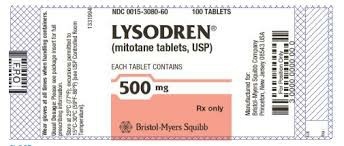
Compared with traditional broad-spectrum chemotherapy drugs such as cisplatin or doxorubicin, the selective destruction mechanism of mitotane gives it a unique position in the treatment of ACC Especially for patients with high risk of postoperative recurrence or patients with metastatic adrenocortical cancer, it is one of the first-line drugs currently recommended by international guidelines (such as NCCN, ESMO). It is worth noting that mitotane usually needs to be taken for a long time to maintain its efficacy. It has a long half-life and accumulation in the body. Its efficacy often takes weeks or even months to establish, so it is different from short-cycle conventional chemotherapy.
In summary, although mitotane has a certain degree of "targeting" in its mechanism of action, it does not work through a specific molecular target and is still a chemotherapy drug in the classic sense, rather than a molecularly targeted therapy. Its clinical application value mainly lies in the adjuvant treatment and recurrence control of adrenocortical cancer. It needs to be used regularly for a long time under the guidance of professional doctors, and blood concentration and adverse reactions should be closely monitored to optimize efficacy and safety.
Reference materials:https://go.drugbank.com/drugs/DB00648
[ 免责声明 ] 本页面内容来自公开渠道(如FDA官网、Drugs官网、原研药厂官网等),仅供持有医疗专业资质的人员用于医学药学研究参考,不构成任何治疗建议或药品推荐。所涉药品可能未在中国大陆获批上市,不适用于中国境内销售和使用。如需治疗,请咨询正规医疗机构。本站不提供药品销售或代购服务。


