
.jpeg)
What are the potential side effects of 0.01% Atropine Sulfate Eye Drops?
Atropine Sulfate Eye Drops 0.01% - EIKANCE is a low-concentration anticholinergic drug used to control the progression of myopia in children. Compared with traditional high-concentration atropine, its side effects are significantly reduced, but individualized responses still need to be paid attention to. Common local adverse reactions include eye irritation, temporary blurred near vision, photophobia and mild dry eyes. These are usually most obvious at the initial stage of medication, and most people can gradually adapt to it as the use time increases. The photophobia phenomenon is due to the slight pupil dilation effect of atropine. Although it is not as obvious as high-concentration preparations, it may still interfere with some children's outdoor activities or vision under strong light. Blurred near vision is mainly caused by mild suppression of ciliary muscle regulation. If parents observe reading difficulties or decreased concentration after their children take medication, they should seek medical evaluation in time.
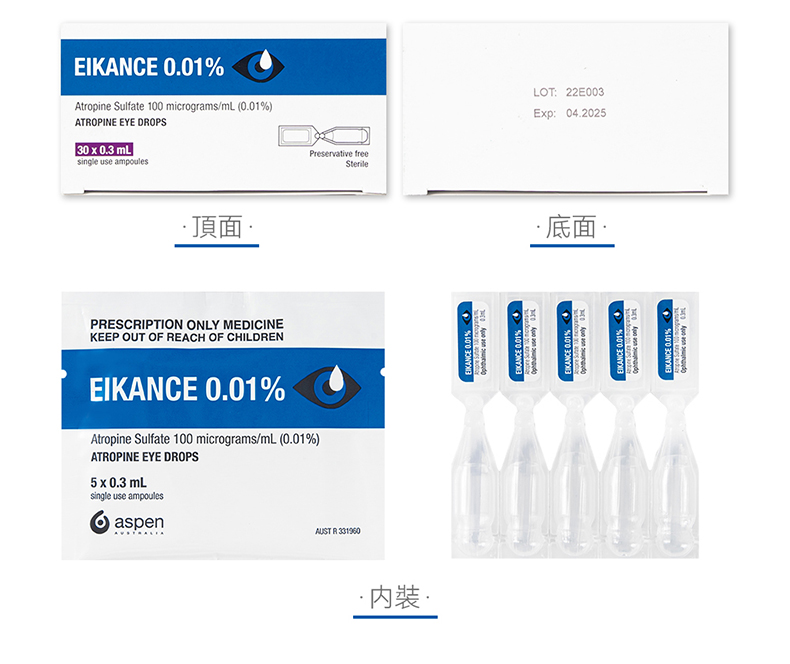
Some individuals may experience mild allergic reactions, including eyelid redness, itching, tearing, or conjunctival congestion. Although such reactions are rare, they should be taken seriously. In rare cases, atropine may be absorbed systemically in small amounts, especially when the lacrimal sac is not compressed, which may cause systemic anticholinergic side effects such as mild facial flushing, rapid heartbeat, and dry mouth, although such reactions are extremely rare at a concentration of 0.01%. To reduce the risk of systemic absorption, it is recommended to press the lacrimal sac for at least 1 minute after instillation. In addition, atropine may affect some optometry results. Parents should proactively inform the doctor that they are using EIKANCE when taking their children to wear glasses or undergo refractive examinations.
Overall,0.01% atropine is well tolerated and has a low incidence of side effects. It is currently one of the most risk-controllable drug options for controlling the progression of myopia. However, due to individual differences, parents still need to pay close attention to changes in their children's eyes during use and return to the ophthalmologist regularly to ensure the safety and effectiveness of the treatment.
Reference materials:https://www.medsafe.govt.nz/profs/datasheet/e/EikanceEyeDrops.pdf
[ 免责声明 ] 本页面内容来自公开渠道(如FDA官网、Drugs官网、原研药厂官网等),仅供持有医疗专业资质的人员用于医学药学研究参考,不构成任何治疗建议或药品推荐。所涉药品可能未在中国大陆获批上市,不适用于中国境内销售和使用。如需治疗,请咨询正规医疗机构。本站不提供药品销售或代购服务。


