
.jpeg)
Perioperative Vorasidenib and Ivosidenib are still effective and safe in IDH1+ diffuse gliomas
Vorasidenib (Voranigo) or Voranigo before and after surgery, according to new findings from a Phase 1 trial (NCT03343197) submitted in 2024, according to /Ivosidenib (Ivosidenib)shows sustained clinical benefit in patients with predominantly non-enhancingIDH1-mutated diffuse gliomas.
At the data cutoff date,64% of evaluable patients (n=22) who received vorasidenib and 45.4% of evaluable patients who received ivosidenib experienced tumor shrinkage. The overall response rate (ORR) of evaluable patients (n=22) treated with vorasidenib was 45.5%, including partial response (PR), minor response (MR), stable disease (SD), and progressive disease (PD) rates of 18.2%, 27.3%, 36.4%, and 18.2%, respectively. The median time to response in this group was 9.2 months (range 2-20), and the median duration of response (DOR) could not be estimated (NE; range 14.7 months NE). The median duration of treatment was 44.67 months (range, 0.9-62.7).
The ORR of evaluable patients (n=22) who received ivosidenib was 31.8%, with the incidence rates of PR, MR, SD and PD being 22.7%, 9.1%, 59.1% and 9.1% respectively. The median time to response in this group was 5.6 months (range 2-13), and the median DOR was 42.4 months (range 1.8-NE). The median duration of treatment was 23.92 months (range, 0.0-62.7). Compared with previously published results, vorasidenib and ivosidenib showed clinical benefit immediately after surgery in patients with predominantly non-enhancing glioma after approximately 3.5 years of additional follow-up. Vorasidenib resulted in durable disease control, including objective responses, consistent with results from the INDIGO Phase 3 study [NCT04164901].
Vorasidenib, an oral brain-penetrating dual mIDH1/2 inhibitor, was approved by the U.S. Food and Drug Administration (FDA) in August 2024 for the treatment of patients with grade 2 astrocytoma or oligodendroglioma who are at least 12 years old and have a predisposing IDH1 or IDH2 mutation and who have previously undergone surgery, including biopsy, subtotal resection, or gross total resection.
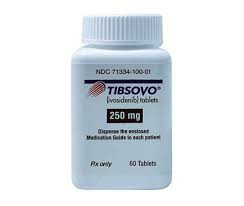
Avosidenib is a first-in-class oral small moleculemIDH1 inhibitors, approved by the FDA for the treatment of patients with disease who carry predisposing IDH1 mutations as detected by an FDA-approved test, including in combination with azacitidine in patients with newly diagnosed acute myeloid leukemia (AML) who are at least 75 years of age or as a monotherapy in adults with relapsed/refractory myelodysplastic syndrome; and as a single agent in adults with locally advanced or metastatic cholangiocarcinoma.
The primary endpoint was 2-hydroxyglutarate (2-HG) concentration in tumors resected after neoadjuvant treatment with vorasidenib or ivosidenib compared with untreated control tumors. Secondary endpoints include safety; pharmacodynamics of 2-HG in plasma; pharmacokinetics in plasma and tumor; and preliminary clinical activity based on response assessment in neuro-oncology criteria for low-grade glioma. Exploratory endpoints include 2-HG concentrations in tumors before and after treatment; and the pharmacokinetic/pharmacodynamic relationships of vorasidenib and ivosidenib in tumor, plasma, and cerebrospinal fluid.
The researchers reported no new safety signals and noted that the drug's safety profile in this analysis was consistent with that observed in previously published studies.
In thevorasidenib group, 100.0% of patients experienced a treatment-emergent adverse event (TEAE) of any grade, and 66.7% of patients experienced treatment-related TEAEs. Serious TEAEs occurred in 41.7% of patients, and serious TEAEs related to treatment occurred in 4.2% of patients. Grade 3 or higher TEAEs, treatment-related grade 3 or higher TEAEs, and AEs of special interest occurred in 62.5%, 12.5%, and 12.5% u200bu200bof patients, respectively. TEAEs resulted in treatment discontinuation, dose reduction, and dose interruption in 4.2%, 4.2%, and 37.5% of patients, respectively.
In the ivonib group, 100.0% of patients experienced TEAEs of any grade, and 72.0% of patients experienced treatment-related TEAEs. Serious TEAEs occurred in 32.0% of patients, and no patients experienced treatment-related serious TEAEs. Grade 3 or higher TEAEs and treatment-related grade 3 or higher TEAEs occurred in 32.0% and 4.0% of patients, respectively. No adverse events of particular concern were reported. TEAEs resulted in treatment discontinuation, dose reduction, and dose interruption in 8.0%, 4.0%, and 20.0% of patients, respectively. It is worth noting that there were no deaths during treatment due to TEAEs in either group.
References:https://www.onclive.com/view/perioperative-vorasidenib-and-ivosidenib-remain-effective-safe-in-idh1-diffuse-glioma
[ 免责声明 ] 本页面内容来自公开渠道(如FDA官网、Drugs官网、原研药厂官网等),仅供持有医疗专业资质的人员用于医学药学研究参考,不构成任何治疗建议或药品推荐。所涉药品可能未在中国大陆获批上市,不适用于中国境内销售和使用。如需治疗,请咨询正规医疗机构。本站不提供药品销售或代购服务。


