
.jpeg)
Will resistance develop to filgotinib? How can patients avoid or cope with resistance issues?
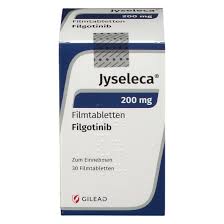
Filgotinib (Filgotinib) is a selective Januskinase1 (JAK1) inhibitor, mainly used to treat moderately to severely active rheumatoid arthritis and other autoimmune diseases, such as ulcerative colitis. As a targeted therapy drug, filgotinib inhibits the JAK-STAT signaling pathway, thereby reducing the production of inflammatory factors and controlling inflammation and immune responses. Although filgotinib has shown good efficacy and tolerability in clinical treatment, there is also a problem that needs attention-drug resistance.
Can resistance develop to filgotinib?
Compared with some traditional small molecule targeted drugs, the resistance mechanism of JAK inhibitors such as filgotinib has not yet been fully clarified, but some clinical data and studies show that some patients may experience weakened efficacy during long-term use. This decrease in efficacy may be due to a decrease in the body's response to the drug, that is, the emergence of so-called "functional resistance", which is not necessarily resistance caused by genetic mutations in the classic sense. Regardless of the mechanism, the ultimate manifestation may be a recurrence of symptoms or an increase in disease activity.
In addition, in some patients, the JAK-STAT signaling pathway may be activated through other pathways, or the body's immune system may develop new compensatory pathways, thereby reducing the inhibitory effect of filgotinib. This also suggests that drug resistance may be a complex process involving multiple factors.
How to identify the occurrence of filgotinib resistance?
Clinical judgment of whether filgotinib resistance occurs is mainly based on the following aspects: first, the patient's symptoms re-exacerbate, such as joint swelling, pain, prolonged morning stiffness, etc.; second, abnormal laboratory indicators, such as C reactive protein (CRP ) and erythrocyte sedimentation rate (ESR) are increased; third, imaging progress suggests increased joint destruction; fourth, disease activity scores assessed by doctors (such as DAS28) are significantly increased.
If the above symptoms persist, even if the patient is still taking medication regularly, he or she should be alert to whether there is resistance or loss of drug efficacy. At this time, the patient should communicate with the doctor in time to adjust the treatment strategy.
How to avoid or delay the occurrence of drug resistance?
In order to avoid filgotinib resistance as much as possible, on the one hand, the treatment plan prescribed by the doctor should be followed, medication should be taken regularly, and no medication should be stopped or reduced at will; on the other hand, it is recommended to establish a reasonable evaluation system at the early stage of treatment and conduct regular follow-up, including symptom observation, laboratory examination and imaging evaluation, so as to detect changes in efficacy early and respond in a timely manner.
Clinically, some experts also suggest that combination therapy may help delay the development of drug resistance. For example, combining filgotinib with traditional DMARDs (such as methotrexate) to treat rheumatoid arthritis can reduce the risk of drug resistance associated with monotherapy. In addition, it is also important to pay attention to lifestyle interventions, such as weight control, smoking cessation, reducing chronic stress, etc., which can help improve the efficacy of drugs and reduce adverse reactions.
How to deal with drug resistance?
Once a patient is confirmed to be resistant to filgotinib, the doctor may recommend changing the treatment plan. For example, switch to another JAK inhibitor such as tofacitinib (Tofacitinib) or upadacitinib ( Upadacitinib), or switching to biologic drugs, such as anti-TNF-α antibodies (such as etanercept, adalimumab), etc. These drugs have different mechanisms of action and may help break through the current state of drug resistance. In addition, some patients are effective again after restarting filgotinib treatment after stopping the drug, which may be related to the body's temporary tolerance.
Overall, although filgotinib resistance is not common, it does occur. Through reasonable treatment management, regular follow-up and scientific individualized medication plans, most patients can achieve long-term disease control and a higher quality of life. Faced with the problem of drug resistance, patients and doctors need to maintain good communication, adjust strategies in a timely manner, and achieve early detection and early response, thereby improving the continuity and effectiveness of treatment.
Reference materials:https://go.drugbank.com/drugs/DB14845
[ 免责声明 ] 本页面内容来自公开渠道(如FDA官网、Drugs官网、原研药厂官网等),仅供持有医疗专业资质的人员用于医学药学研究参考,不构成任何治疗建议或药品推荐。所涉药品可能未在中国大陆获批上市,不适用于中国境内销售和使用。如需治疗,请咨询正规医疗机构。本站不提供药品销售或代购服务。


