
.jpeg)
After taking ensidipine for three years, the patient shared his experience with the medication!
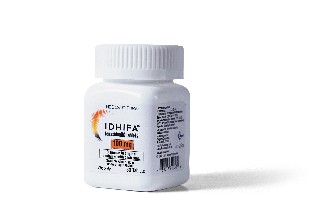
Enasidenib is a targeted drug used to treat IDH2 mutant relapsed or refractory acute myeloid leukemia (AML). Its mechanism of action is to inhibit the mutated IDH2 enzyme and reduce the accumulation of 2-hydroxyglutarate (2-HG), thereby promoting the normal differentiation of tumor cells. For patients who have been using ensidipine continuously for three years, the changes in their condition vary from person to person, but overall they can be observed from several aspects.
Being able to use ensidipine for a long time indicates that the patient tolerates the drug well and the condition may be in a relatively stable state of control. Some patients can achieve complete remission or partial remission within 6 months to 1 year of treatment and maintain it for many years. During the three-year treatment period, if there is no obvious progression or recurrence of the disease, the hematological indicators are basically stable, indicating that the drug has played a positive role in prolonging disease-free survival and overall survival.
However, long-term use of the medication may also present some challenges. Some patients may develop secondary resistance during treatment. Even if they are initially sensitive to ensidipine, the later efficacy may be weakened due to tumor cell gene evolution or drug-resistant mutations. In addition, long-term medication also requires attention to cumulative toxicity issues, such as liver function damage, hyperbilirubinemia, or bone marrow suppression, especially in elderly patients, which require careful monitoring.
Another aspect worth noting is IDH inhibitor-related syndrome (Differentiation Syndrome). Although it usually occurs in the early stages of treatment, a small number of patients may still relapse in the later stages of treatment, manifesting as fever, dyspnea, pleural effusion, etc., which require timely use of glucocorticoid intervention.
Generally speaking, the disease progression after taking ensidipine for three years is closely related to the patient's disease status, gene mutation spectrum, and whether it is combined with other treatments (such as hematopoietic stem cell transplantation) and other factors. If the disease is always under good control without significant side effects or resistance during treatment, then ensidipine may have become a long-term solution to maintain disease remission. However, if leukemia cells increase again or clinical symptoms reappear, it is necessary to re-evaluate as soon as possible and consider changing treatment strategies.
Reference materials:https://www.idhifa.com/
[ 免责声明 ] 本页面内容来自公开渠道(如FDA官网、Drugs官网、原研药厂官网等),仅供持有医疗专业资质的人员用于医学药学研究参考,不构成任何治疗建议或药品推荐。所涉药品可能未在中国大陆获批上市,不适用于中国境内销售和使用。如需治疗,请咨询正规医疗机构。本站不提供药品销售或代购服务。


